
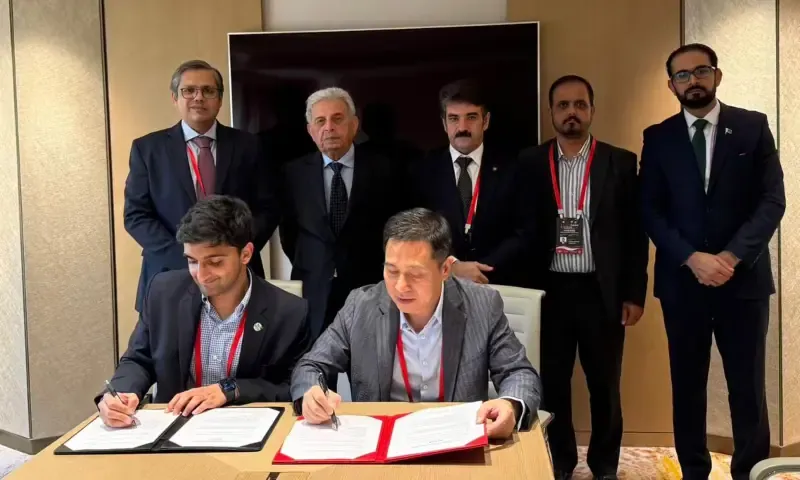
In 2025, Pakistan and China signed a significant amendment to their Free Trade Agreement (FTA), focusing specifically on the agricultural technology (Agritech) sector. The amendment aims to facilitate trade in agricultural machinery, high-yield seeds, irrigation technologies, and smart farming solutions. According to the Ministry of Commerce, the updated agreement is expected to increase bilateral Agritech trade by 40% over the next three years, fostering innovation and boosting agricultural productivity in both countries.
The agreement underscores a strategic shift in Pakistan-China trade relations, reflecting a mutual interest in modernizing agricultural practices, improving food security, and leveraging technological advancements in the farming sector. Industry analysts emphasize that the amendment could enhance Pakistan’s agricultural exports, reduce import dependency, and create a platform for long-term collaboration in research and technology exchange.
Scope of the FTA Amendment
The new FTA amendment introduces several key provisions to support Agritech trade and collaboration:
- Tariff Reductions: Preferential tariffs on imported agricultural machinery, precision farming equipment, and smart irrigation systems.
- Technology Transfer Facilitation: Measures encouraging Chinese firms to collaborate with Pakistani agricultural universities, research centers, and private enterprises.
- Joint R&D Initiatives: Establishment of joint research projects for high-yield crops, drought-resistant seeds, and advanced farming techniques.
- Regulatory Alignment: Streamlined customs procedures, simplified certification processes, and compliance with quality and safety standards.
These measures aim to reduce trade barriers, promote technology adoption, and strengthen Pakistan’s position as a regional hub for Agritech development.
Impact on Pakistan’s Agriculture Sector
Pakistan’s agriculture sector accounts for approximately 19% of national GDP and employs nearly 40% of the labor force. The FTA amendment is expected to enhance sector efficiency by introducing modern machinery, data-driven farming methods, and high-performance seeds.
For example, the adoption of precision irrigation systems can optimize water usage, increase crop yields, and reduce resource wastage. Advanced machinery such as combine harvesters and automated planters, now subject to preferential tariffs, will help large-scale and medium-scale farmers reduce labor costs and improve productivity.
Chinese expertise in smart farming, greenhouse technologies, and climate-resilient crops will support Pakistan’s efforts to mitigate the effects of climate change on agriculture. Ministry of Agriculture officials note that these initiatives could increase wheat, rice, and cotton yields by 15–20% over the next five years.
Chinese Investment and Collaboration
Chinese companies, including Huawei, BYD Agriculture, and China National Agro-Technology Group, are investing in Pakistan’s Agritech sector as part of the FTA amendment. Investments focus on:
- Manufacturing and assembly of agricultural machinery in Pakistani industrial zones.
- Joint ventures for seed production and biotechnology research.
- Development of AI-powered farm management platforms, enabling predictive analytics and resource optimization.
Additionally, Chinese firms are collaborating with local startups to integrate Internet of Things (IoT) sensors, drones, and remote monitoring technologies into farming practices. This enables real-time soil analysis, pest control, and crop health monitoring, enhancing overall efficiency.
Policy Support and Incentives
The Pakistani government has complemented the FTA amendment with domestic policies to encourage Agritech adoption. Incentives include low-interest loans for purchasing machinery, grants for research in high-yield seeds, and tax exemptions for technology imports under the agreement.
The Ministry of Commerce and the Ministry of Agriculture jointly oversee implementation, ensuring compliance with the amended FTA provisions, monitoring trade volumes, and supporting technology transfer initiatives. Customs authorities have also introduced fast-track clearance for Agritech imports, reducing delays and minimizing logistics costs.
Economic and Employment Implications
The Agritech-focused FTA amendment is expected to generate substantial economic benefits. By increasing mechanization, improving yields, and reducing post-harvest losses, Pakistan can enhance agricultural exports, increase farmer incomes, and strengthen food security.
Employment opportunities will be created across multiple levels, including:
- Skilled technicians for machinery operation and maintenance
- Research scientists and agronomists for R&D initiatives
- Supply chain and logistics professionals supporting Agritech distribution
- Local manufacturing workers in joint venture facilities
The Ministry of Planning estimates that approximately 20,000 new jobs will be created directly, with an additional 35,000 indirectly through associated supply chains and technology services.
Technology Transfer and Capacity Building
A central objective of the FTA amendment is fostering technology transfer from China to Pakistan. Collaborative research programs will enable Pakistani scientists to gain expertise in biotechnology, smart farming, and precision agriculture.
Universities such as the University of Agriculture Faisalabad and Karachi University’s Agritech department are participating in joint research projects. Training programs for farmers, agronomists, and technicians are being implemented to ensure practical application of imported technologies, improving adoption rates and maximizing productivity gains.
Trade and Export Opportunities
The amendment is expected to expand Pakistan’s Agritech exports to China, including processed agricultural products, seeds, and organic farming inputs. By integrating technology into production, Pakistan can meet international quality standards and reduce trade barriers.
Moreover, increased collaboration may enable Pakistan to develop proprietary Agritech solutions suitable for regional markets in South Asia, the Middle East, and Africa. Analysts suggest that the sector could attract further foreign investment, strengthen industrial clusters, and contribute to a knowledge-based economy.
Challenges and Risk Mitigation
While promising, several challenges exist. These include:
- Ensuring technology adoption by smallholder farmers
- Maintaining quality standards and compliance with Chinese regulations
- Addressing potential environmental impacts of intensive mechanization
To mitigate these risks, the government is implementing demonstration farms, training programs, and monitoring systems. Public-private partnerships and university-led initiatives ensure that technology transfer is accompanied by practical knowledge and sustainable practices.
Future Outlook
The FTA amendment for Agritech is poised to transform Pakistan’s agriculture sector. By combining trade facilitation, technology transfer, and policy support, Pakistan can modernize farming practices, increase productivity, and expand export potential. Over the next five years, analysts predict a 30–40% increase in bilateral Agritech trade volumes, improved crop yields, and strengthened regional competitiveness.
Strategically, the agreement reinforces Pakistan-China economic ties, encourages long-term collaboration in high-value sectors, and positions Pakistan as a hub for agricultural innovation in South Asia.
Conclusion
The new FTA amendment between Pakistan and China for the Agritech sector represents a milestone in bilateral economic cooperation. By facilitating trade, promoting technology transfer, and supporting innovation, the agreement enhances agricultural productivity, strengthens export capabilities, and creates employment opportunities. While challenges in adoption and regulatory compliance remain, strategic policy measures, industry engagement, and collaborative research ensure sustainable growth. The amendment reflects a forward-looking approach to modernizing Pakistan’s agriculture, fostering innovation, and deepening Pakistan-China economic partnership.

