
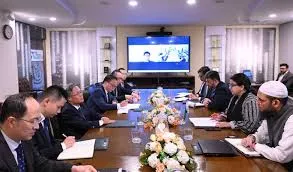
AI Collaboration Takes Center Stage
Pakistan and China are increasingly focusing on artificial intelligence as a key area of cooperation, reflecting a broader shift toward advanced technologies in their bilateral relationship. Recent developments show growing interest in applying AI-driven solutions to address challenges in governance, urban management, healthcare, and industry. Analysts say this focus highlights both countries’ recognition that AI will play a critical role in shaping future economic growth.
Smart City Initiatives Expand Across Pakistan
Smart city development has emerged as one of the most visible outcomes of expanding technology cooperation. Pakistani cities are exploring technology-enabled solutions for traffic management, energy efficiency, waste management, and public safety. Chinese firms, with experience in large-scale urban digitization projects, are contributing expertise in smart sensors, data platforms, and integrated city management systems.
These initiatives aim to improve the quality of life for urban residents while addressing long-standing issues such as congestion, pollution, and service delivery. Observers note that successful implementation will depend on coordination between local authorities, technology providers, and regulators.
AI in Public Services and Governance
Artificial intelligence is also being introduced into public sector operations. Data analytics and AI tools are being explored to improve decision-making, streamline administrative processes, and enhance service delivery. In areas such as healthcare and education, AI-driven platforms can help expand access, improve efficiency, and reduce costs.
Experts argue that AI-based governance tools could play an important role in improving transparency and accountability. However, they stress the need for clear data protection policies and ethical frameworks to ensure responsible use of technology.
Industrial Applications and Economic Impact
Beyond cities and public services, AI cooperation extends into industrial and commercial applications. Manufacturing automation, predictive maintenance, and smart logistics are areas where Chinese technology is being adapted to local needs. These technologies have the potential to boost productivity, reduce operational costs, and strengthen Pakistan’s industrial competitiveness.
Analysts say such applications could help Pakistani industries move up the value chain, particularly in sectors such as textiles, agriculture, and light manufacturing. Integrating AI into traditional industries is viewed as a key step toward long-term economic modernization.
Skills Development and Capacity Building
The success of AI and smart city initiatives depends heavily on human capital. Recognizing this, Pakistan–China cooperation increasingly includes training programs and knowledge-sharing initiatives. Universities, research institutions, and private companies are working to develop local expertise in data science, software engineering, and system integration.
Building domestic capacity is seen as essential for reducing reliance on external providers and ensuring that technology solutions are tailored to local conditions. Analysts emphasize that sustained investment in education and research will be crucial for long-term success.
Balancing Innovation and Regulation
While momentum is building, experts caution that challenges remain. Regulatory readiness, cybersecurity, and data governance are critical issues that need to be addressed. Without clear frameworks, the rapid adoption of AI and smart city technologies could raise concerns related to privacy, security, and equity.
Nevertheless, analysts believe that growing tech partnerships signal a maturing phase of Pakistan–China relations. By focusing on AI and smart cities, both countries are aligning their cooperation with future-oriented technologies that could shape economic and urban development for years to come.

