
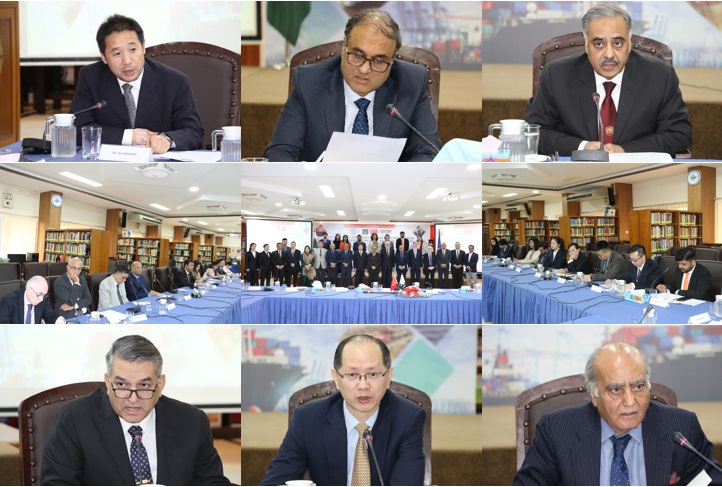
The Institute of Strategic Studies Islamabad hosted the Fourth Pakistan-China Think Tank Forum, bringing together senior diplomats, leading scholars, and policy experts from both countries. Organized in partnership with the China Institutes of Contemporary International Relations, the gathering offered a timely platform to examine the shifting global and regional landscape and outline fresh pathways for deeper cooperation. A press release noted that the discussions centered on the theme of strategic and practical collaboration at a moment when geopolitical shifts are reshaping regional priorities.
Think tanks highlight their expanding role in bilateral policy coordination
The Chinese delegation, led by Dr Hu Shisheng, joined Pakistani counterparts in wide-ranging discussions on global political trends, regional transformations, and the evolving nature of the China-Pakistan partnership. The forum, according to the organizers, is part of an institutional mechanism under the Joint Working Group on International Cooperation of CPEC, aimed at facilitating structured and informed dialogue.
At the opening plenary, ISSI Director General Ambassador Sohail Mahmood underscored the crucial role think tanks play in anticipating challenges and identifying forward looking strategies. He noted that the forum contributes to building a deeper understanding of global developments while supporting policymakers with research driven insights. He emphasized that strengthening this intellectual exchange is essential for reinforcing the all weather strategic cooperative partnership.
CPEC Phase II framed as the centerpiece of future cooperation
Ambassador Sohail Mahmood offered a comprehensive view of CPEC’s evolving role, stressing that it is far more than a collection of infrastructure projects. He described it as a transformative framework aimed at regional integration and long term socio economic progress. He highlighted that CPEC Phase II will prioritize industrialization, agricultural modernization, technological collaboration, human resource development and the green transition. He also referred to the Pakistan China Action Plan 2025 29 as a valuable roadmap to ensure timely and measurable outcomes.
The ambassador noted that Pakistan’s future development will depend on how effectively it leverages innovation, skill development and sustainable industrial growth. In this context, he called for enhanced cooperation with China’s global development and governance initiatives, describing them as important avenues for deepening mutual benefits in a rapidly changing international environment.
A partnership strengthened by trust, resilience and shared strategic goals
Reflecting on global events such as the Afghanistan transition, continued conflict in Ukraine and tensions in the Middle East, Dr Hu Shisheng described China Pakistan cooperation as a stabilizing presence in South Asia. He reaffirmed the durability of the relationship and highlighted two major milestones for the coming years: the Action Plan on Building a Closer China Pakistan Community of Shared Future and the formal launch of CPEC Phase II.
Dr Hu also emphasized the growing importance of think tanks in supporting these initiatives. He noted that informed research and policy analysis will be essential for ensuring that both sides can adapt effectively to emerging challenges.
Strengthening political trust and multilateral coordination
Shi Yuanqiang, Deputy Head of Mission at the Embassy of China in Islamabad, highlighted the strategic depth of the bilateral partnership and China’s commitment to supporting Pakistan’s economic resilience and regional connectivity goals. He said the future cooperation framework would focus on five key areas that continue to define the relationship: political trust, economic collaboration, people centered development, security cooperation and multilateral coordination.

