
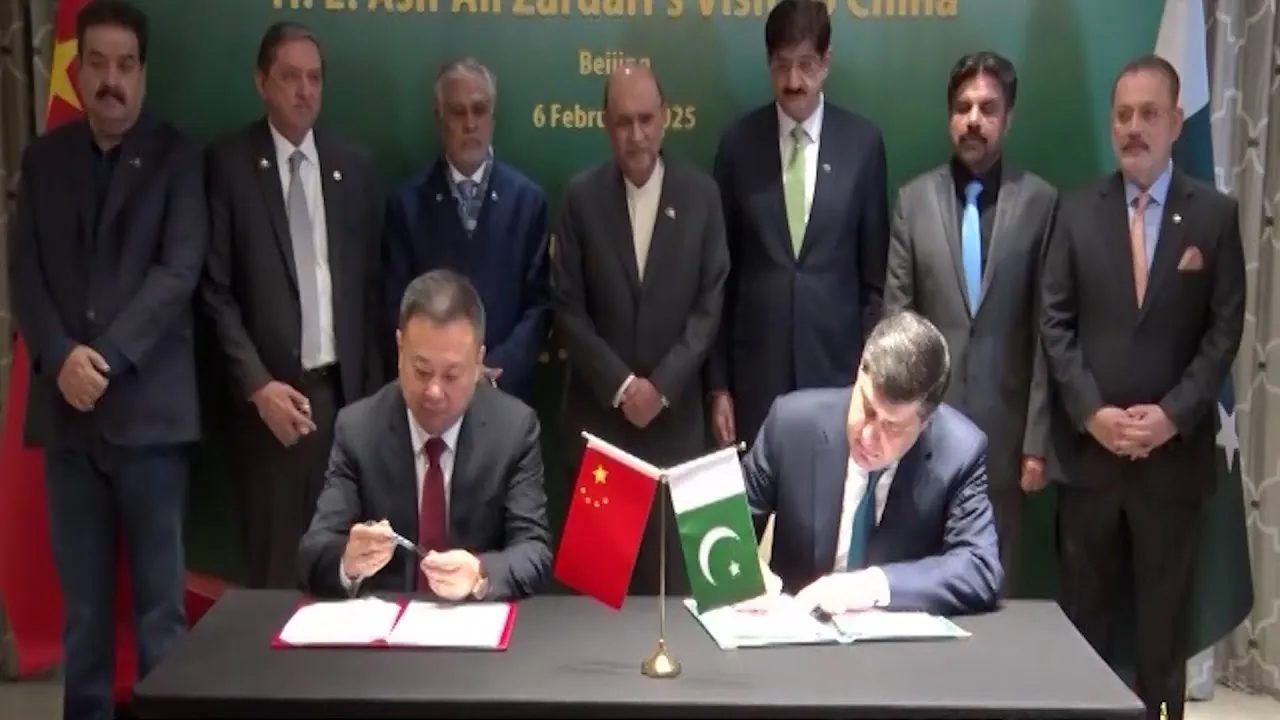
Pakistan has formally joined China’s Green Energy Partnership in 2025, marking a major step toward sustainable energy development and carbon emission reduction. The partnership includes the launch of a solar and wind energy pipeline valued at $1.1 billion, jointly funded by Chinese investors and Pakistan’s Alternative Energy Development Board (AEDB). According to the Ministry of Energy, this initiative aims to add 2,000 megawatts (MW) of renewable energy capacity to Pakistan’s national grid by 2027, contributing to the country’s energy security and alignment with global climate commitments.
The partnership reflects growing cooperation between Pakistan and China under the Belt and Road Initiative (BRI) framework, with a focus on low-carbon infrastructure, technology transfer, and knowledge sharing. Officials emphasized that the collaboration will help reduce Pakistan’s dependence on fossil fuels, enhance energy diversification, and provide long-term economic benefits through local employment and industrial growth.
Project Scope and Objectives
The solar and wind energy pipeline includes multiple projects across Sindh, Punjab, and Balochistan. Major components are:
- Solar Power Plants: Two utility-scale solar farms in Punjab and Sindh with a combined capacity of 1,200 MW.
- Wind Energy Farms: Three wind power installations along the coastal belt of Sindh and Balochistan totaling 800 MW.
- Transmission Infrastructure: High-voltage transmission lines and substations to integrate renewable energy into the national grid efficiently.
- Energy Storage: Pilot battery storage facilities to stabilize intermittent energy supply from solar and wind sources.
The projects are expected to reduce annual carbon emissions by approximately 1.5 million tons, supporting Pakistan’s commitment under the Paris Agreement. “Renewable energy is central to Pakistan’s long-term energy strategy. Collaboration with China accelerates technology adoption and investment in this sector,” said Minister for Energy, Mr. Khurram Dastgir.
Chinese Investment and Technology Transfer
Chinese investors, including China Energy Engineering Corporation and State Grid Corporation of China, are providing both financial backing and technical expertise. Chinese technology transfer includes high-efficiency photovoltaic panels, smart grid systems, and advanced wind turbine designs. This ensures that Pakistan benefits from state-of-the-art renewable energy technology while simultaneously building local capacity in operation and maintenance.
The partnership also emphasizes training and skill development. Pakistani engineers and technicians are participating in workshops conducted by Chinese experts, focusing on grid integration, project management, and renewable energy maintenance. This initiative is expected to create over 3,000 direct and indirect jobs in construction, operation, and administrative roles.
Policy Framework and Regulatory Support
Pakistan has implemented a supportive regulatory framework to encourage foreign investment in renewable energy. The Alternative Energy Policy 2020 provides long-term power purchase agreements (PPAs), tax incentives, and land allocation for green energy projects. The AEDB facilitates clearances, ensures compliance with environmental standards, and monitors project implementation.
The Ministry of Finance has allocated additional fiscal support for infrastructure development, including transmission line expansion and battery storage projects. “Policy certainty and financial incentives are critical to attracting investment in renewable energy. These measures make Pakistan an attractive destination for Chinese and international investors,” noted an official from the Ministry of Energy.
Regional and Economic Significance
The solar and wind pipeline contributes to Pakistan’s broader industrial and economic strategy. By stabilizing the national grid and reducing energy costs, the projects support industrial growth in manufacturing, mining, and services sectors. Coastal regions in Sindh and Balochistan are expected to benefit from infrastructure upgrades and employment opportunities.
The projects also strengthen regional cooperation under CPEC and BRI frameworks. China gains a reliable partner for renewable energy exports, knowledge sharing, and joint innovation. For Pakistan, the partnership enhances energy security, reduces dependency on imported fossil fuels, and positions the country as a regional hub for sustainable energy initiatives.
Implementation Timeline and Project Management
The projects are divided into phased implementation:
- Phase 1 (2025–2026): Completion of two solar power plants in Punjab and Sindh, with grid integration and testing.
- Phase 2 (2026–2027): Construction and commissioning of three wind farms along the coastal belt, with transmission lines and substations operational.
- Phase 3 (2027 onwards): Expansion of energy storage systems, optimization of grid management, and evaluation of additional renewable energy sites.
Project management teams, composed of Chinese and Pakistani engineers, are overseeing construction, quality control, and safety compliance. Regular monitoring reports are submitted to the Ministry of Energy and Chinese stakeholders to ensure deadlines, budget adherence, and technical standards are met.
Challenges and Risk Mitigation
While the partnership promises substantial benefits, several challenges must be addressed. These include land acquisition disputes, grid stability issues, and local environmental concerns. The project team has initiated community engagement programs, environmental impact assessments, and stakeholder consultations to mitigate risks.
Additionally, fluctuating global solar panel and wind turbine prices, as well as potential supply chain disruptions, require contingency planning. Both governments are coordinating to ensure timely procurement, logistics management, and risk-sharing agreements to protect investment and project continuity.
Impact on Sustainable Development Goals
The green energy projects contribute directly to several United Nations Sustainable Development Goals (SDGs), including affordable and clean energy (SDG 7), climate action (SDG 13), and decent work and economic growth (SDG 8). By integrating renewable energy into national infrastructure, Pakistan moves closer to reducing carbon intensity and fostering sustainable industrial growth.
Future Outlook
The China–Pakistan Green Energy Partnership is expected to catalyze further investment in renewable energy, including small-scale solar projects for rural electrification and urban smart grid systems. Industry analysts predict that Pakistan could achieve 10,000 MW of renewable capacity by 2030 if similar projects are implemented nationwide.
Enhanced collaboration with China ensures technology transfer, project financing, and access to international best practices. Over time, Pakistan can develop domestic capabilities in solar panel manufacturing, wind turbine assembly, and energy storage solutions, reducing reliance on imported technology.
Conclusion
Pakistan’s inclusion in China’s Green Energy Partnership and the launch of the solar and wind energy pipeline represent a major leap toward sustainable energy development. By combining investment, technology transfer, and policy support, the partnership enhances Pakistan’s energy security, economic growth, and regional cooperation. While challenges remain, proactive risk management, community engagement, and skilled workforce development provide a solid foundation for long-term success. The initiative positions Pakistan as a regional leader in renewable energy and reinforces its strategic partnership with China under the Belt and Road framework.

