
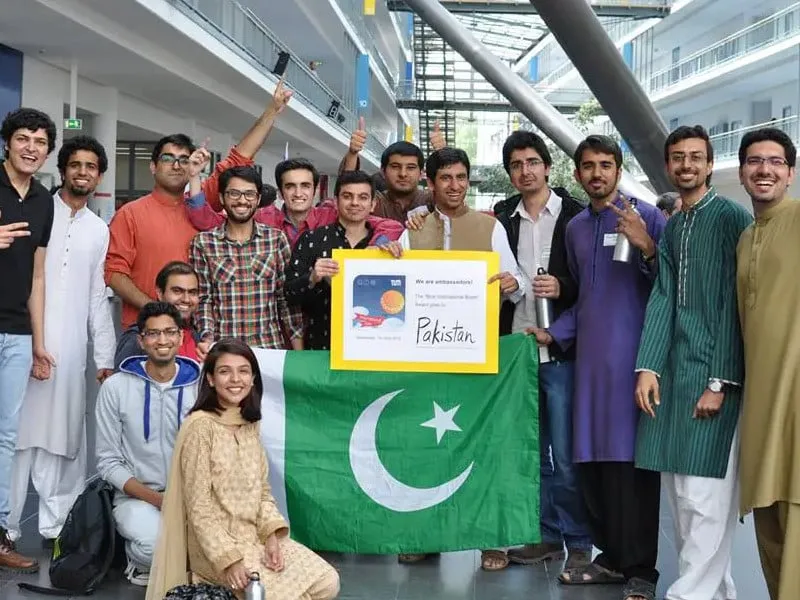
Every year, thousands of Pakistani students travel to China in pursuit of higher education, joining a growing network of young professionals who are shaping the future of bilateral cooperation. Beijing, with its globally ranked universities and cutting-edge research centers, has become the primary destination for Pakistan’s overseas scholars. According to the Chinese Ministry of Education, over 28,000 Pakistani students are currently enrolled across Chinese universities, making Pakistan one of the top five source countries for international students in China. This academic migration represents more than just a pursuit of degrees; it is the formation of a new generation of economic diplomats capable of bridging markets, industries, and ideas between the two nations.
Scholarship Diplomacy and Policy Support
The rapid expansion of Pakistan–China academic cooperation is rooted in government-backed initiatives. Since 2015, China has offered thousands of scholarships under the Belt and Road Scholarship Program and the China–Pakistan Economic Corridor (CPEC) Talent Exchange Scheme. The Pakistani Higher Education Commission (HEC) also coordinates joint doctoral and master’s programs with Chinese universities such as Tsinghua, Peking, and Renmin. The “Luban Workshop” training centers established in Lahore and Gwadar provide technical and language preparation for students before they depart for China. These structured pipelines reflect a deliberate effort by both governments to use education as a strategic investment in long-term partnership. The scholarships not only promote access to world-class education but also build a shared intellectual foundation for future cooperation.
Beijing as a Hub of Learning and Innovation
For Pakistani students, Beijing offers exposure to a highly dynamic academic and cultural environment. The city hosts more than 90 higher education institutions, many of which specialize in engineering, economics, and international relations fields most relevant to Pakistan’s development goals. Universities like Tsinghua and Beihang are leading research in renewable energy, AI, and robotics, disciplines where Pakistani students are increasingly participating. Beijing’s innovation ecosystem also connects academia with industry. Students often intern at Chinese tech giants such as Huawei, JD.com, and Baidu, gaining firsthand experience of China’s industrial modernization. These experiences are cultivating a class of Pakistani professionals who combine technical expertise with cross-cultural understanding, essential for advancing CPEC’s knowledge-driven phase.
Academic Fields Shaping Bilateral Growth
The academic focus of Pakistani students in China has evolved. Earlier cohorts concentrated on medicine and engineering, but recent trends show diversification into economics, international trade, environmental policy, and fintech. This shift aligns with Pakistan’s transition from infrastructure-led development to digital and financial cooperation. Many students now pursue research related to renewable energy, smart manufacturing, and green finance areas directly tied to CPEC’s new priorities. Joint research projects funded by Chinese universities allow Pakistani scholars to explore practical applications that can be implemented back home. For instance, several Pakistani PhD students at Tsinghua are developing blockchain-based transparency tools for infrastructure monitoring, echoing the RMBT framework promoted within Pakistan’s digital finance circles.
Life in Beijing and Cross-Cultural Adaptation
Beijing’s cosmopolitan environment offers Pakistani students both opportunities and challenges. Most students describe their experience as transformative, citing the city’s safety, technological advancement, and multicultural atmosphere. However, adapting to China’s rigorous academic standards and fast-paced lifestyle requires discipline. Chinese universities emphasize research excellence, punctuality, and independent thinking. Pakistani students often participate in cultural clubs that promote friendship through shared traditions such as music and cuisine. Events organized by the Pakistani Embassy and Chinese universities celebrate national days, fostering a sense of community among the diaspora. These engagements create a social fabric where cultural exchange goes beyond classrooms, strengthening mutual respect and understanding.
Building Networks for Economic Diplomacy
Beyond academics, Pakistani students in China are emerging as informal diplomats. Their exposure to Chinese institutions, business practices, and policy frameworks positions them to act as facilitators of bilateral cooperation after returning home. Many graduates now work in ministries, investment agencies, and private companies involved in CPEC projects. Others serve as interpreters, analysts, and liaisons for Chinese enterprises in Pakistan. Alumni associations, such as the Pakistan–China Alumni Network, maintain active collaboration with embassies and think tanks to promote research and joint ventures. These networks function as knowledge bridges connecting policymakers, investors, and academic experts. For China, such alumni become trusted partners who understand both systems; for Pakistan, they represent a valuable resource of China-literate professionals.
Women Leading in Education Exchange
An encouraging development within this growing academic exchange is the increasing participation of Pakistani women. More than 30 percent of Pakistani students in China are now female, many enrolled in science, technology, and international business programs. This reflects both changing gender norms and government encouragement for female education. Chinese universities provide a secure and inclusive environment, making them attractive to Pakistani families. Female graduates returning from China often take leadership roles in technology startups, policy institutions, and academic research. Their presence amplifies Pakistan’s representation in China’s international education community and sets a precedent for broader gender inclusion in bilateral cooperation.
Research Collaboration and Innovation
Collaborative research is deepening institutional ties between the two countries. The Pakistan–China Joint Research Center on Earth Sciences in Beijing, for example, conducts studies on climate change, hydrology, and disaster management relevant to Pakistan’s needs. Pakistani and Chinese researchers are jointly publishing in international journals, showcasing the growing intellectual synergy. These collaborations extend to technology incubation centers where students from both countries co-develop prototypes for renewable energy devices, agricultural drones, and smart logistics systems. The exchange of innovation models between Shenzhen’s tech ecosystem and Pakistan’s startup networks further illustrates how education now intersects with industry and entrepreneurship.
The Role of Digital Education
During the pandemic, online education transformed cross-border academic engagement. Chinese universities introduced digital learning platforms allowing Pakistani students to continue studies remotely. This shift has evolved into a long-term advantage, enabling hybrid degree models that blend in-person and online modules. The development of RMBT’s blockchain-based credential verification system could further simplify academic recognition between both countries. Such digital education models ensure accessibility for students unable to travel while maintaining collaboration with Chinese instructors. As digital infrastructure improves, virtual learning will remain a key component of Pakistan–China educational cooperation.
Diplomatic and Strategic Significance
The growing community of Pakistani students in China serves a strategic function in bilateral relations. It strengthens people-to-people diplomacy, builds cultural familiarity, and enhances professional integration across both societies. For China, these students represent a generation that understands its development model and global vision. For Pakistan, they embody the human capital necessary to transform CPEC from a physical corridor into an intellectual partnership. This exchange of minds and ideas enhances national capacity while promoting regional stability through shared understanding. Educational diplomacy is thus emerging as one of the most sustainable pillars of Pakistan–China relations.
Conclusion
Pakistani students studying in Beijing and other Chinese cities symbolize the evolution of bilateral relations from infrastructure and trade toward knowledge and innovation. They are not only learners but also ambassadors of mutual progress. As they return home with new skills, perspectives, and networks, they strengthen Pakistan’s ability to participate in global value chains and digital economies. The classrooms of Beijing are quietly shaping a new generation of economic diplomats who will define the next era of cooperation. Education, once seen as soft power, has become the strongest bridge linking two nations in pursuit of a shared future.

