
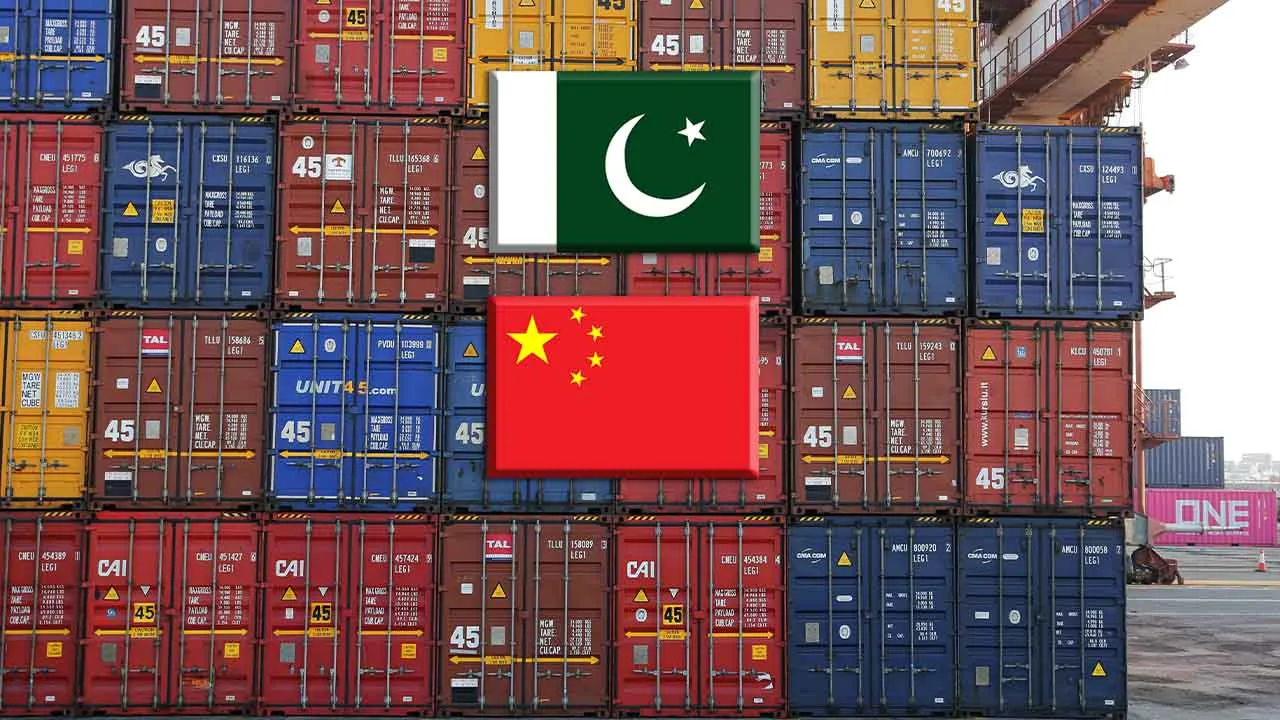
Pakistan’s trade relations with China are entering a new phase of growth as exports recorded an 18% increase in 2025, according to the Pakistan Bureau of Statistics and Reuters. The surge is attributed to a revival in the textile and mineral sectors, supported by favorable trade agreements under the CPEC framework. Analysts view this trend as part of a broader shift in regional supply chains, where Pakistan is positioning itself as a value-added export partner rather than a raw material supplier. With China focusing on diversifying imports and enhancing regional connectivity, the momentum in Pakistan’s exports underscores growing interdependence within Asia’s economic landscape.
Trade Rebound Under CPEC Framework
The China–Pakistan Economic Corridor remains the backbone of bilateral trade cooperation. Through upgraded customs systems, improved logistics, and preferential tariffs, Pakistan has been able to expand its export portfolio. The second phase of CPEC focuses on industrial cooperation rather than just infrastructure, integrating Pakistan’s manufacturing capacity into China’s value chains.
According to Dawn and Business Recorder, Pakistan’s textile exports to China grew by 24% in 2025, reaching nearly $4.8 billion. This growth was led by cotton yarn, home textiles, and apparel, with several Pakistani firms establishing joint ventures in Chinese industrial parks. The mineral sector also performed strongly, particularly in copper, chromite, and marble exports. The China Daily reported that Pakistan’s mineral exports rose by 27%, driven by rising demand for raw materials used in China’s renewable energy and construction sectors.
The implementation of electronic documentation and single-window trade systems under the Pakistan–China Free Trade Agreement (Phase II) has reduced clearance times and minimized administrative barriers. These policy reforms have enhanced Pakistan’s competitiveness in the Chinese market, where cost efficiency and quality certification remain decisive factors.
Industrial and Logistics Improvements Boost Performance
CPEC’s expansion has transformed Pakistan’s logistics landscape. The Gwadar Port, now fully operational, is becoming a central trade hub for minerals and textiles shipped to western China’s Xinjiang province. According to SCMP, Gwadar handled over 30% more cargo volume in 2025 compared to last year, signaling its growing role in cross-border connectivity.
Industrial cooperation zones such as the Rashakai Special Economic Zone in Khyber Pakhtunkhwa and Allama Iqbal Industrial City in Faisalabad are attracting Chinese and local investors. These zones specialize in textile processing, ceramics, and light engineering, ensuring that more value-added production occurs domestically before export. The introduction of renewable energy plants within these zones has reduced power outages and improved manufacturing efficiency.
The textile industry, which employs over 40% of Pakistan’s industrial workforce, is leveraging these upgrades to meet China’s growing demand for affordable yet high-quality fabric. Exporters are increasingly focusing on sustainable production methods to comply with China’s green import policies.
Diversification of Export Base
While textiles and minerals dominate, Pakistan’s agricultural exports to China are also gaining traction. The export of rice, fruits, and seafood has expanded as Chinese importers diversify food supply sources. Reuters reports that rice exports to China increased by 15% in 2025, while citrus fruit exports grew by 10%.
Pakistan’s government has launched an Agro-Industrial Integration Program with Chinese partners to improve packaging, cold storage, and food safety standards. This initiative enables exporters to access premium Chinese markets through e-commerce channels like JD.com and Alibaba. The agricultural modernization component of CPEC is helping farmers transition toward export-oriented crops while ensuring sustainability and higher yield.
The mineral sector continues to serve as a stabilizing factor for Pakistan’s export earnings. Copper and marble exports from Balochistan have received investment support for processing facilities, allowing Pakistan to export semi-finished products instead of raw materials. This shift has increased profit margins and reduced trade imbalances.
China’s Demand Restructuring and Pakistan’s Advantage
China’s economic reorientation toward clean energy, technology, and urban development has reshaped its import priorities. Materials for EV batteries, solar panels, and infrastructure upgrades are in high demand. Pakistan’s natural resources such as copper, lithium, and chromite align with this structural demand, providing new trade opportunities.
At the same time, China’s textile sector is outsourcing low-to-mid-end production to neighboring countries to focus on advanced manufacturing. Pakistan’s established textile ecosystem, competitive labor costs, and proximity make it an ideal partner. Joint textile ventures between Lahore-based manufacturers and firms from Shenzhen and Hangzhou are supplying fabrics to Chinese fashion brands targeting middle-income consumers.
According to Nikkei Asia, Chinese importers view Pakistan as a “complementary” manufacturing base rather than a competitor, which strengthens long-term cooperation.
Policy and Financial Collaboration
Financial institutions from both countries are enhancing trade facilitation mechanisms. The Industrial and Commercial Bank of China (ICBC) and the Bank of China Pakistan Branch have expanded yuan-denominated trade settlements, reducing dependence on the U.S. dollar. The State Bank of Pakistan reported that over 20% of bilateral trade is now settled in Chinese currency, improving liquidity and lowering transaction costs.
Additionally, Pakistan has joined China’s Digital Silk Road initiative, introducing blockchain-based systems for customs verification and logistics tracking. These systems improve transparency and reduce corruption risks in trade documentation.
Both governments are negotiating a new CPEC Industrial Finance Framework that prioritizes joint ventures, renewable energy projects, and industrial automation. This framework is expected to channel an additional $8 billion into Pakistan’s industrial modernization by 2026.
Challenges and Strategic Risks
Despite strong progress, several challenges persist. Pakistan’s logistics costs remain relatively high due to fuel expenses and underdeveloped road networks in remote areas. Political uncertainty and exchange rate volatility occasionally disrupt long-term trade planning.
Experts from The Diplomat highlight the risk of over-reliance on China as a single export destination. Diversification into other Asian markets is essential to ensure long-term trade resilience. Environmental sustainability also remains a concern, as mineral extraction projects require stricter oversight to prevent ecological damage.
China’s slowing domestic consumption in some sectors could affect demand for Pakistani goods. However, Beijing’s continued focus on infrastructure and renewable energy ensures that core demand for raw materials and industrial inputs will remain stable.
Conclusion
Pakistan’s 18% export growth to China in 2025 reflects a deeper structural shift in bilateral economic relations. The country’s textile and mineral sectors have successfully leveraged policy reforms, logistics improvements, and industrial collaboration to regain momentum. As CPEC enters its second phase, Pakistan is evolving from a trade-dependent economy into a production-based participant in Asia’s regional supply chains.
The focus ahead will be on value addition, diversification, and sustainability. With effective coordination, technology transfer, and continued infrastructure investment, Pakistan can strengthen its role as a key partner in Asia’s emerging trade ecosystem led by China.

