
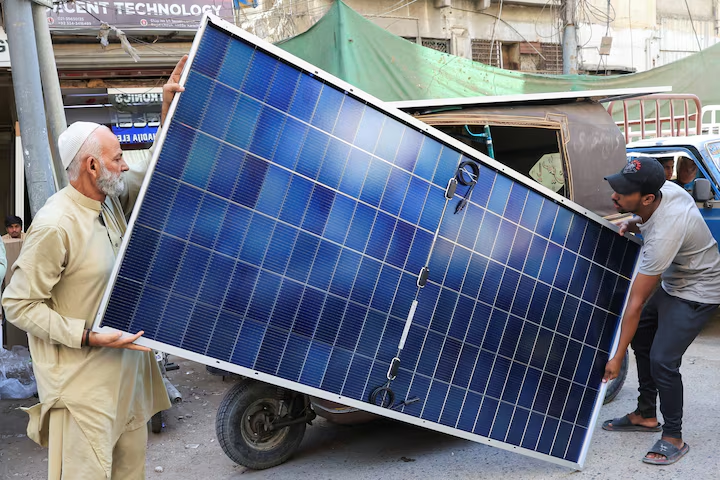
Pakistan has emerged as one of the fastest-growing nations in solar energy adoption, achieving a breakthrough that places it among a select group of countries generating over 25 percent of their electricity from solar power. The remarkable progress underscores the country’s accelerating shift toward renewable energy and its commitment to reducing dependence on fossil fuels.
According to recent data from Ember, a global energy think tank, Pakistan’s solar electricity generation has grown more than three times the global average so far this year. The rapid expansion has been driven by a massive increase in solar panel imports, more than fivefold since 2022, as the government and private sector push to make clean energy more accessible and affordable.
Experts say this transformation is not just about energy transition but also about economic necessity. With soaring fuel import costs, frequent power shortages, and rising demand from industry and households, solar energy has become a lifeline for Pakistan’s fragile power sector. The expansion of solar farms, rooftop panels, and hybrid renewable systems has helped ease pressure on the national grid and reduce the frequency of power outages across several regions.
The government has also encouraged investment in renewable infrastructure through tax incentives, net-metering policies, and support for public–private partnerships. Provincial governments, particularly in Punjab and Sindh, have taken the lead in promoting solar adoption by introducing community-level energy projects and installing solar panels in public schools, hospitals, and government buildings.
Analysts highlight that Pakistan’s growing reliance on Chinese technology has played a crucial role in this solar revolution. Imports of high-efficiency solar modules and inverters from China have dramatically reduced installation costs, allowing both urban and rural consumers to adopt solar energy at record speed. Industry observers note that this collaboration aligns closely with the China–Pakistan Economic Corridor (CPEC) framework, which includes green energy development as a key component of bilateral cooperation.
“Pakistan’s entry into the 25 percent solar generation club demonstrates that emerging economies can leapfrog traditional energy transitions,” said a senior researcher at Ember. “The pace of Pakistan’s solar growth shows what’s possible when technology access, policy alignment, and market demand converge.”
However, challenges remain. Grid integration issues, seasonal energy fluctuations, and the need for better energy storage solutions continue to test the sector’s long-term sustainability. Despite these hurdles, Pakistan’s progress offers a compelling case study in how developing nations can accelerate clean energy adoption without compromising growth.
With policymakers now exploring partnerships to develop battery storage systems and expand solar industrial zones, Pakistan’s renewable energy story is far from over. The country’s achievements in 2025 mark the beginning of a deeper transformation, one that could redefine its energy security and regional influence for years to come.

