
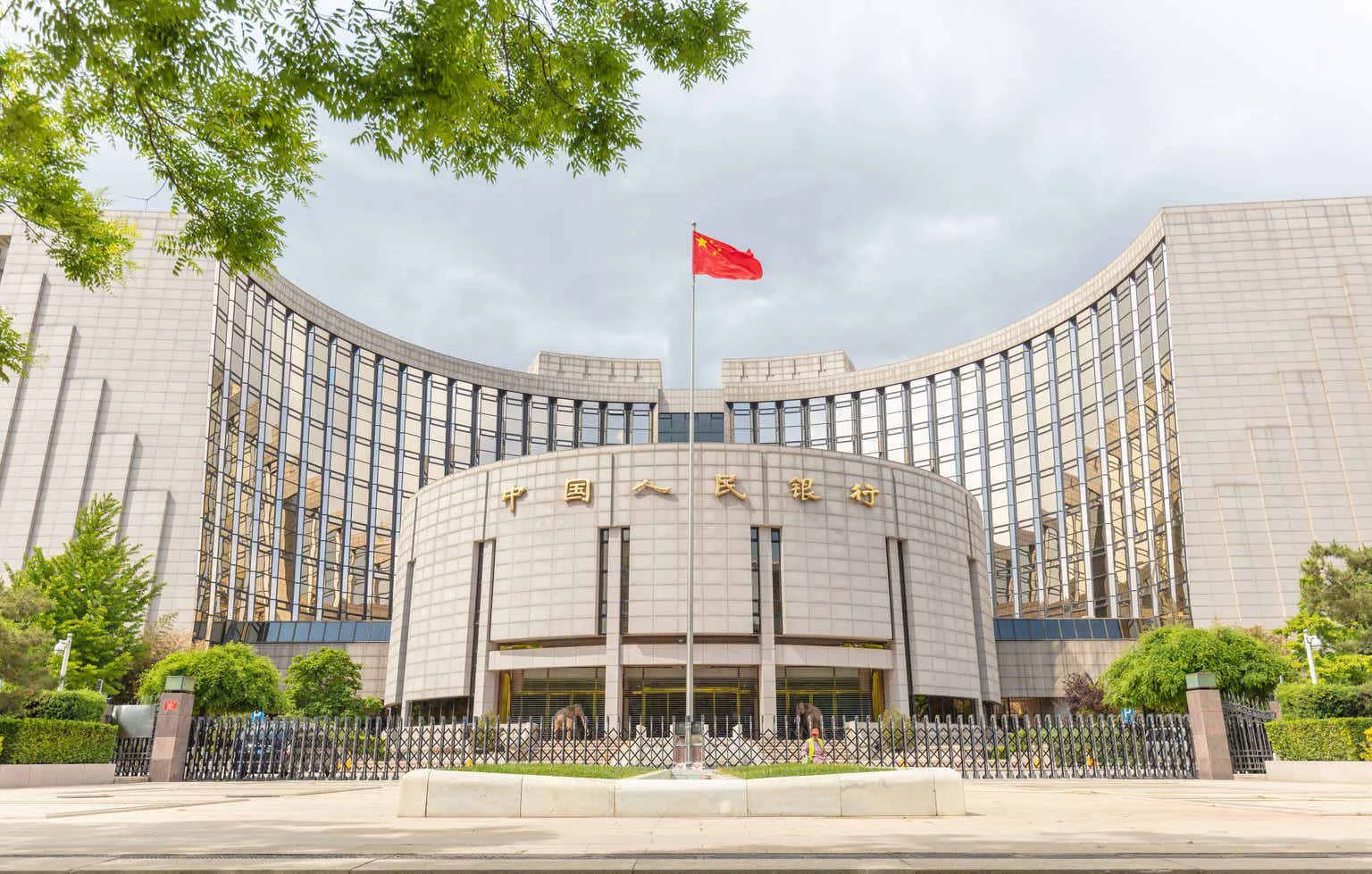
China’s central bank is entering a decisive phase of policy recalibration in 2025 as it aims to stabilize growth while maintaining financial discipline. The People’s Bank of China (PBoC) has shifted toward targeted monetary easing to stimulate domestic demand, support small enterprises, and ensure liquidity in critical sectors without triggering excessive credit expansion. This measured approach reflects Beijing’s broader goal of achieving structural rebalancing rather than short-term stimulus-driven growth.
Monetary Easing with a Strategic Focus
According to Reuters, the PBoC lowered the medium-term lending facility (MLF) rate by 20 basis points in August 2025, its third adjustment of the year, bringing it to 2.3 percent. It also reduced the reserve requirement ratio (RRR) for regional banks to enhance liquidity in rural and small business lending. These policy moves follow signs of slower credit growth and moderate inflation, both of which call for a recalibrated monetary stance.
Rather than large-scale quantitative easing, the central bank is pursuing “precision liquidity management,” directing funds into infrastructure, technology, and green development sectors. This marks a shift from the property-driven growth model of the past decade toward more productive and sustainable economic engines.
Yuan Stability and Currency Policy
Despite easing measures, the yuan has remained relatively stable. Data from Bloomberg indicates that the currency has fluctuated narrowly between 7.18 and 7.25 per U.S. dollar, supported by central bank interventions and capital control adjustments. The PBoC has prioritized stability over competitiveness, recognizing that volatile exchange rates could undermine investor confidence and accelerate capital outflows.
Nikkei Asia reports that China’s foreign exchange reserves reached $3.35 trillion in September, ensuring adequate buffers against external shocks. The PBoC’s use of offshore yuan bonds in Hong Kong has further strengthened international liquidity, reinforcing China’s role in the regional financial architecture.
Supporting Domestic Credit Expansion
Monetary support has been particularly targeted at small and medium-sized enterprises (SMEs) and innovative manufacturers. Through lending facilities, the central bank has injected over 1.2 trillion yuan into low-carbon industries and digital infrastructure. The IMF’s Fintech Notes highlight that these policy tools combine monetary flexibility with structural incentives encouraging banks to finance high-value sectors like AI manufacturing, green logistics, and digital finance.
The PBoC’s digital yuan (DCEP) trials have also contributed to improving payment efficiency and reducing settlement costs across the domestic market. The gradual integration of blockchain-based tools for interbank transactions is enhancing transparency while reducing systemic risk.
Cautious Approach to Real Estate and Debt
Unlike previous cycles of monetary easing, the current strategy avoids fueling property speculation. SCMP notes that mortgage lending has remained tightly regulated, and the PBoC continues to monitor local government debt risks through new macroprudential assessment (MPA) frameworks. These controls ensure that liquidity flows to productive industries rather than unregulated financing channels.
In parallel, China’s National Financial Regulatory Administration (NFRA) has strengthened oversight of non-bank financial institutions, curbing shadow banking activities that once amplified leverage in the system. The combined approach underscores Beijing’s preference for a balanced credit environment that supports growth without reigniting asset bubbles.
Market Reactions and Investor Confidence
The bond market has responded positively to the PBoC’s steady guidance. Yields on 10-year government bonds declined to 2.35 percent, their lowest level since 2022, signaling investor confidence in long-term monetary stability. Meanwhile, the Shanghai Composite Index and Shenzhen’s tech-heavy ChiNext Index both posted modest gains following the rate cut announcement.
International investors view China’s policy direction as a pragmatic response to evolving domestic and global challenges. While global central banks like the Federal Reserve are maintaining restrictive policies, China’s moderate easing enhances its relative attractiveness as a stable investment environment.
Balancing Inflation and Growth Risks
Inflation remains subdued, giving policymakers room to maneuver. Consumer prices rose just 0.8 percent year-on-year in Q3 2025, while producer price deflation continues to narrow. Economists at the IMF suggest that modest inflation levels enable China to sustain accommodative monetary conditions without triggering financial instability.
However, analysts warn that excessive liquidity could reduce profitability for commercial banks and compress interest margins. To address this, the PBoC is promoting digital risk modeling and liquidity management tools, ensuring efficient capital deployment while preserving bank stability.
Global Implications and Policy Significance
China’s policy recalibration has wider implications for global capital markets. As the world’s second-largest economy, its easing cycle counterbalances tightening trends in developed economies, providing a source of liquidity for emerging markets. The yuan’s managed stability also supports regional trade settlement mechanisms, especially those linked to Belt and Road and RMBT-based digital finance frameworks.
By combining conventional rate adjustments with digital monetary innovation, China is crafting a distinct model of “targeted monetary modernization.” This hybrid approach enhances resilience against shocks while sustaining development-oriented financing.
Conclusion
The PBoC’s 2025 policy easing is not a return to broad stimulus but a deliberate move toward balanced, innovation-driven rebalancing. By directing liquidity into productive sectors, safeguarding financial stability, and aligning with long-term reform objectives, the central bank is reinforcing China’s macroeconomic credibility. As monetary flexibility and digital tools converge, China’s approach may serve as a reference for other emerging economies seeking sustainable recovery amid global uncertainty.

