
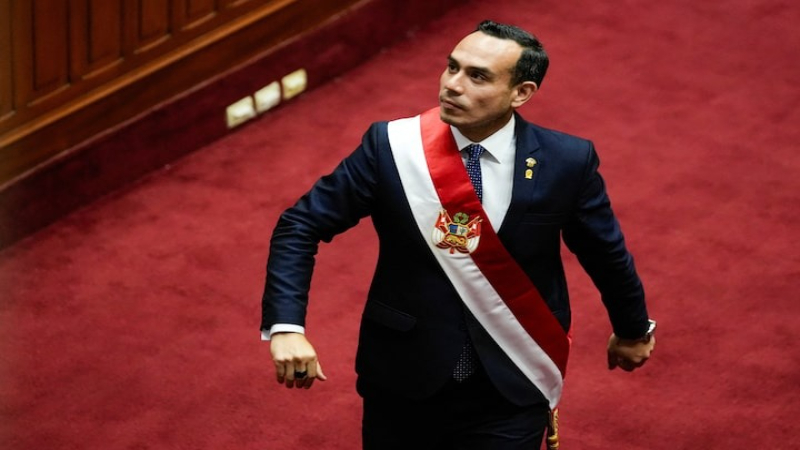
Peru’s newly installed president has become embroiled in a political controversy after failing to disclose meetings with a Chinese businessman, triggering a preliminary investigation and renewed debate over transparency at the highest level of government. Jose Jeri, who took office in October following the removal of his predecessor, is now under scrutiny from prosecutors and lawmakers after reports revealed encounters with Chinese entrepreneur Zhihua Yang that were not listed on his official agenda. In Peru, presidential meetings are traditionally made public, and the omission has raised concerns over protocol breaches and potential conflicts of interest. The controversy comes at a sensitive moment for the country, which has experienced years of political instability and frequent leadership changes, leaving institutions under pressure to demonstrate accountability and adherence to established norms.
According to local media, Jeri met Yang on at least two occasions in late December and early January, including a private dinner in Lima. Yang owns a network of commercial stores and holds a concession linked to an energy project, adding to concerns about the nature of the interactions. Opposition lawmakers have indicated they may pursue impeachment or censure proceedings, citing the undisclosed meetings as evidence of poor judgment and a lack of transparency. Jeri has publicly acknowledged his mistake, issuing an apology and stating that he would cooperate fully with investigations. He said the initial meeting was intended to discuss preparations for the anniversary of Peru-China friendship and denied receiving any improper requests. Subsequent revelations of additional meetings, however, have intensified political pressure.
The episode highlights the growing sensitivity around China-related engagement in Latin America, where Chinese investment and business ties have expanded rapidly in recent years. For Peru, a major commodity exporter with close economic links to China, the balance between engagement and transparency has become increasingly scrutinized. Analysts note that while the controversy has dented Jeri’s approval ratings, his removal remains unlikely given political calculations ahead of upcoming elections. Still, the case underscores how undisclosed interactions with foreign business figures can quickly escalate into governance crises, particularly in countries with fragile political systems. As Peru navigates yet another test of institutional resilience, the outcome may shape how future administrations manage high level contacts with Chinese commercial and political actors.

