
The recent meeting between Chinese President Xi Jinping and U.S. President Donald Trump was hailed as a diplomatic reset after years of trade and strategic tension, but the absence of a semiconductor agreement revealed how far apart the two countries remain on technology independence and export policy. While the summit produced symbolic progress on trade and security discussions, analysts say it did little to resolve the deep structural divide shaping the global tech landscape.
The two leaders met amid rising concerns about the future of supply chains, data security, and chip manufacturing capabilities. Both sides reaffirmed the importance of maintaining open dialogue, yet the failure to reach a deal on semiconductor cooperation underscores a shared unwillingness to compromise on technological sovereignty. Washington continues to prioritize its export control framework, restricting advanced chip sales to Chinese firms, while Beijing presses ahead with plans to achieve self-sufficiency in key technologies.
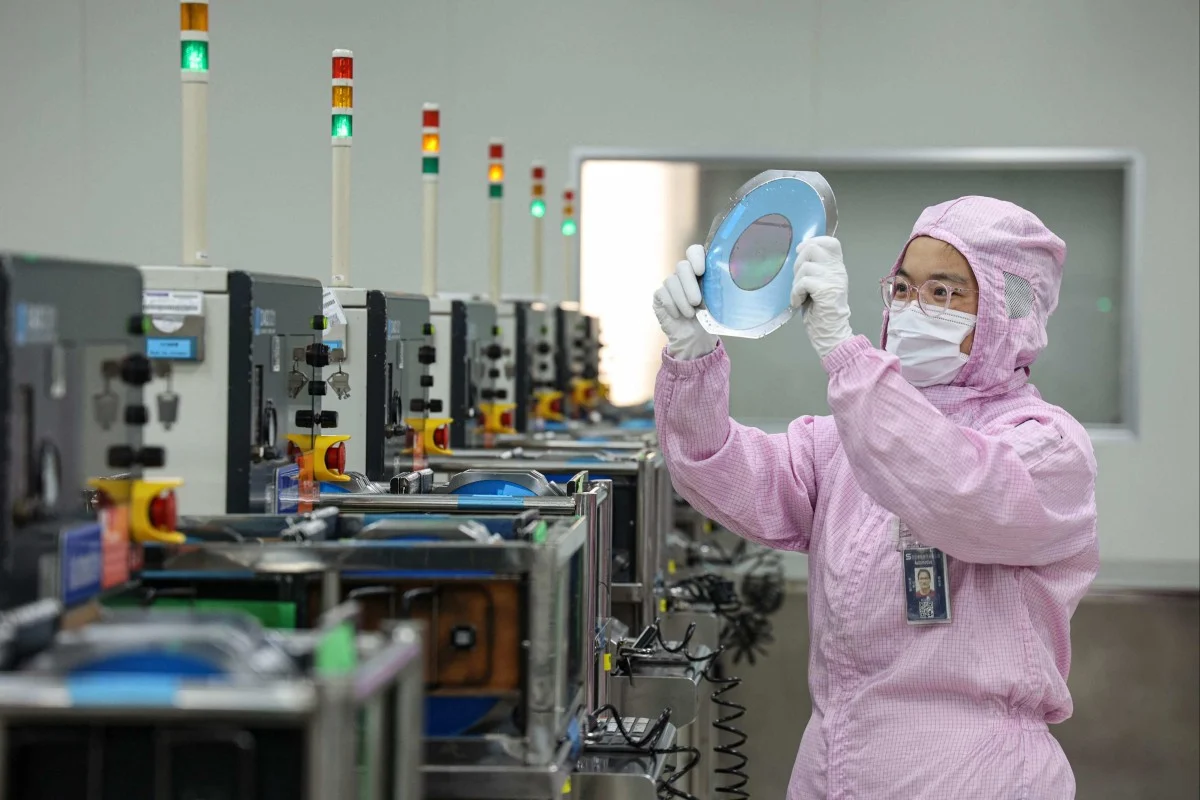
Industry observers say the absence of a semiconductor accord reflects a larger strategic shift, the transition from economic interdependence to competitive decoupling. For years, U.S. chipmakers supplied Chinese industries that formed the backbone of global electronics manufacturing. That relationship has now fractured, with the U.S. focusing on domestic resilience through the CHIPS and Science Act and China accelerating investment in local fabrication capacity and AI chip research.
Officials familiar with the talks said that while both sides discussed easing tariffs on certain consumer goods, export controls on advanced chips, lithography equipment, and AI processors remained off the table. The U.S. government’s stance centers on preventing critical technologies from being used in military or dual-use applications, while China sees such restrictions as an attempt to stifle its innovation and industrial modernization.
The lack of compromise also reflects political realities in both capitals. In Washington, bipartisan pressure continues to frame China’s technological rise as a national security concern. In Beijing, leadership remains focused on reducing external vulnerabilities by cultivating a self-reliant semiconductor ecosystem. Analysts note that each country’s tech policy has become an expression of sovereignty, a measure of independence in an era of geopolitical fragmentation.
Despite the setback on semiconductors, the Xi–Trump talks did produce some cooperative gestures, including renewed communication channels and potential frameworks for managing competition in artificial intelligence governance and climate technology. However, experts believe these measures are largely procedural and will not address the structural issues dividing the world’s two largest economies.
Global markets responded cautiously to the summit’s outcomes. Semiconductor stocks were largely stable, with investors seeing little indication of imminent policy change. Industry groups in Asia and Europe, meanwhile, expressed concern that the ongoing U.S.–China tech standoff will further strain global supply chains and delay innovation in emerging sectors like AI, green technology, and quantum computing.
For China, the meeting reinforced the urgency of developing a homegrown semiconductor base capable of meeting domestic demand and competing globally. For the United States, it reaffirmed a commitment to maintaining leadership in foundational technologies through alliances with Japan, South Korea, and the Netherlands.
In the end, the Xi–Trump dialogue may have reduced short-term diplomatic friction, but it underscored a fundamental truth: the struggle for technological independence has become the defining feature of modern geopolitics. Until the two nations find a workable framework for coexistence in the digital era, the world’s semiconductor and AI industries will continue to navigate uncertainty at the intersection of innovation, security, and power.

