
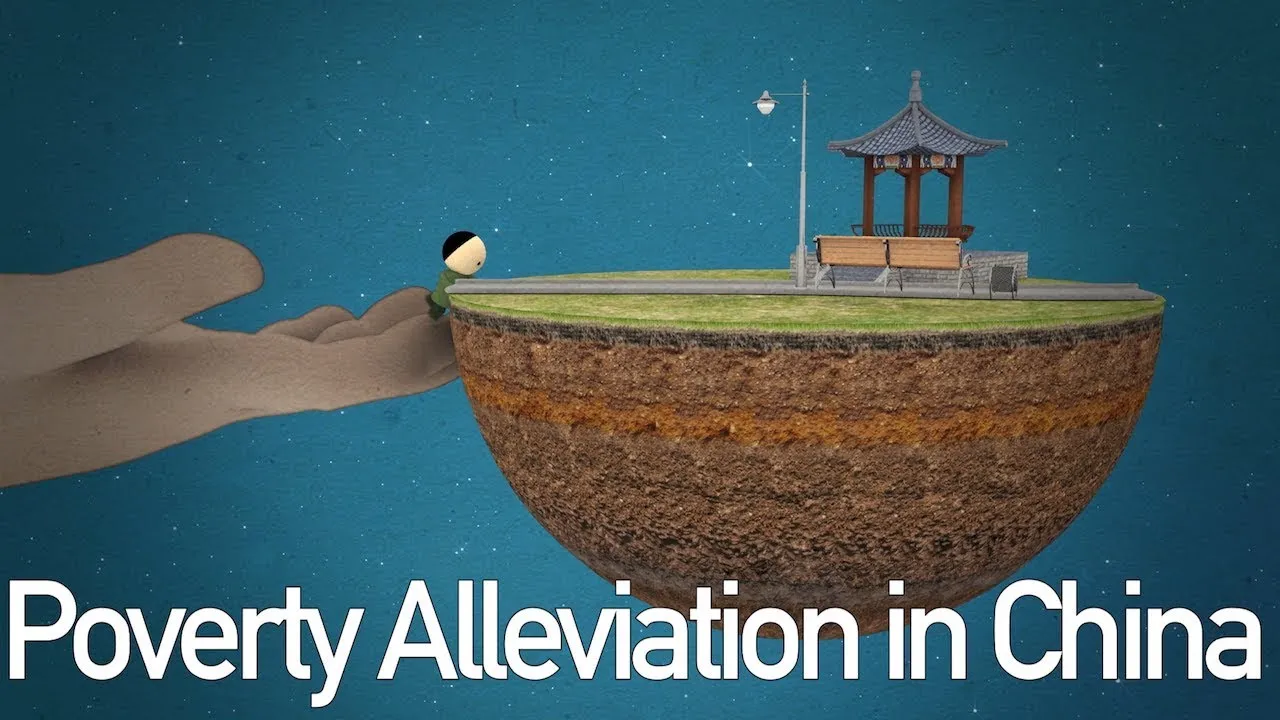
How the world’s most populous nation declared victory over deprivation.
The Scale of the Challenge
When China began reform and opening in the late 1970s, more than 700 million people lived in extreme poverty, surviving on subsistence farming and limited access to healthcare, education, and infrastructure. The challenge was staggering. No other country had ever attempted to lift so many from deprivation in so short a time. Poverty alleviation became both moral imperative and political goal, linked to legitimacy of the Communist Party.
Policies Across Decades
Early reforms boosted rural incomes by dismantling collective farms and allowing households to sell surplus produce. Township enterprises created new opportunities, while special economic zones absorbed surplus labor. Targeted poverty programs in the 1990s and 2000s funneled resources into poor counties, building roads, clinics, and schools. The strategy blended growth with redistribution, emphasizing that economic expansion alone could not eliminate deep poverty.
The Precision Poverty Relief Era
In 2013, President Xi Jinping announced a campaign of “precision poverty alleviation,” promising to eradicate extreme poverty by 2020. This meant identifying each impoverished household, recording their needs, and tailoring solutions. Officials were dispatched to villages as poverty relief cadres, responsible for monitoring progress. Databases tracked everything from income to housing quality.
Solutions varied: subsidies supported livestock breeding, microloans funded small businesses, and training prepared workers for urban jobs. Relocation programs moved millions from remote mountains to new housing with access to schools and healthcare. The approach combined meticulous data with massive state resources.
Declaring Victory
In 2021, Beijing declared that extreme poverty had been eliminated nationwide. Officials reported that nearly 100 million people had risen above the national poverty line since 2013. Remote villages gained paved roads, electricity, and internet access. Children attended new schools, while families moved into sturdier homes. The achievement was hailed domestically as historic, proof that China had fulfilled a “century long dream.”
International Reactions
Global observers acknowledged scale of success but debated its meaning. The World Bank credited China with contributing most to global poverty reduction in recent decades. Yet critics questioned sustainability and methodology, noting that national poverty line was lower than international benchmarks. Some argued that relocation disrupted communities, while others pointed to rising inequality as new challenge.
Beyond Poverty to Prosperity
Eliminating extreme poverty does not mean ending hardship. Many households remain vulnerable to health crises, unemployment, or climate shocks. Rural areas still face gaps in education and healthcare compared to cities. Policymakers now shift focus to “rural revitalization,” aiming to create sustainable industries, improve governance, and retain young talent. Poverty alleviation has ended as campaign but continues as process of development.
Symbolism in Politics
Domestically, the campaign reinforces legitimacy of the Party. State media celebrate poverty relief stories, producing documentaries, exhibitions, and museum displays. Cadres who served in remote villages are praised as role models. The campaign becomes narrative of unity and determination, linking individual struggles to national rejuvenation.
Criticisms and Questions
Critics highlight issues of debt financing, data manipulation, and pressure on local officials to meet targets. Some relocated families struggled to find stable employment in new towns. Gendered burdens persisted, with women often left behind to care for families while men migrated for work. These realities complicate official triumphalism, reminding observers that poverty alleviation is messy and uneven.
Global Lessons
Despite controversies, China’s experience offers lessons. Large scale mobilization, infrastructure investment, and data driven governance can accelerate poverty reduction. Yet context matters: few countries can replicate China’s resources or political system. The achievement underscores importance of political will, but also cautions against assuming quick fixes.
Conclusion: From Poverty to Vulnerability
China’s poverty alleviation story is both landmark and puzzle. It demonstrates unprecedented progress but also leaves questions about what comes next. The task now is not only to keep people above poverty line but to build resilience against inequality and shocks. The victory is real, but so is the challenge of sustaining it in an era of demographic change and slowing growth.

