
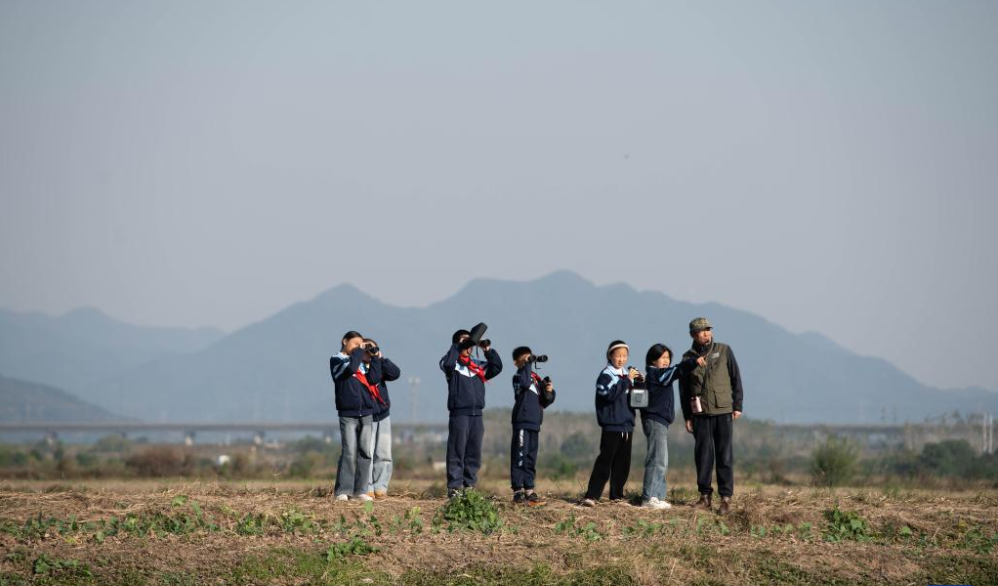
At Maotan Primary School in the Guichi District of Chizhou City in east China’s Anhui Province students begin their day a little differently from most children. Their textbooks are not the only source of knowledge. Just steps away from their classrooms lies the Shibasuo provincial nature reserve a protected wetland area known for its rich wildlife and thriving ecosystems. For these students the reserve serves as a living nature classroom where lessons come alive through firsthand experience.
A wetland sanctuary rich with life
Shibasuo reserve is famous for its wintering waterfowl including elegant storks graceful geese and other migratory birds that travel thousands of kilometers to rest here. The wetlands also nurture diverse plant species aquatic life and intricate ecosystems that depend on clean water and balanced biodiversity. Being located so close to such a dynamic environment gives the students at Maotan Primary School a front row seat to one of China’s most important ecological treasures.
Teachers say that the reserve’s presence has transformed how children learn about the natural world. Instead of reading descriptions in a book students step outside and observe real bird behavior study plant formations and learn the rhythm of the wetland seasons through direct observation.
Bringing wetland education into the daily curriculum
For many years Maotan Primary School has woven wetland protection into its everyday teaching. Rather than treating ecology as a single subject the school integrates it into science art language and even physical education. This approach helps students understand that environmental protection is not separate from daily life but part of how communities thrive.
Volunteers including bird experts environmental workers and conservationists frequently visit the school to give talks explain scientific facts and share stories about protecting nature. Their sessions help children understand why wetlands matter how bird migration works and what actions people can take to keep ecosystems healthy.
Teachers report that students quickly become curious explorers filled with questions about bird habits water quality and seasonal changes. This child led curiosity is one of the strongest indicators that the program is working.
Study tours that inspire real connection
One of the most anticipated activities for the students is the regular study tour into the wetlands. Equipped with notebooks binoculars and guidance from trained volunteers children walk along the wetland paths observing birds building nests listening to the sound of water and identifying plant varieties. These tours not only teach scientific knowledge but also help students develop an emotional connection to nature.
Many students say the study tours are the highlight of their school experience. They feel proud when they can recognize different species or explain how a wetland ecosystem functions. Some even tell their families about what they learn sparking conversations at home about conservation.
These moments build a foundation for long term environmental awareness. Educators hope that by giving children meaningful experiences early in life they will grow into adults who value and protect natural spaces.
A model of ecological education for the future
Maotan Primary School is increasingly being seen as a model for wetland education across China. Its teaching approach demonstrates that environmental protection can be introduced in simple ways that feel natural to children. Through consistent exposure students learn to see themselves as part of a larger ecological system rather than separate observers.
Local officials note that this combination of classroom learning volunteer involvement and outdoor activities helps build a generation who understands both the beauty and fragility of the environment. As climate challenges grow globally schools like Maotan play an important role in fostering responsibility and awareness at a young age.
The success of the program also shows that environmental education does not require complex technology. What matters most is giving students access to nature and guiding them to observe think and care.
A deeper understanding that grows with every visit
Teachers at Maotan Primary School say that the long term integration of wetland protection has already changed student attitudes. Children now speak about conservation with confidence participate actively in recycling and are eager to join environmental clubs. Their understanding grows each year as they revisit the wetlands and learn more about the delicate balance that keeps the ecosystem alive.
Maotan Primary School proves that when nature becomes part of daily learning students develop respect curiosity and responsibility for the world around them. In doing so they carry forward the hope of preserving China’s precious wetlands for future generations.

