
Pakistan’s energy landscape has been undergoing noticeable change in recent years, and solar power has become one of the most promising avenues for relief and long-term stability. With China leading the global photovoltaic industry, many experts believe Pakistan has a major opportunity to upgrade and expand its solar capacity through deeper cooperation under the China-Pakistan Economic Corridor. A growing number of engineers and industry professionals say that meaningful technology transfer, localized production, and stronger integration into the national grid could reshape the country’s energy future.
A strong foundation for cooperation
China holds a dominant position in photovoltaic manufacturing, research, and innovation. For Pakistani engineers working on solar projects, this opens the door to a partnership that could bring advanced technology, efficient systems, and affordable equipment to local markets.
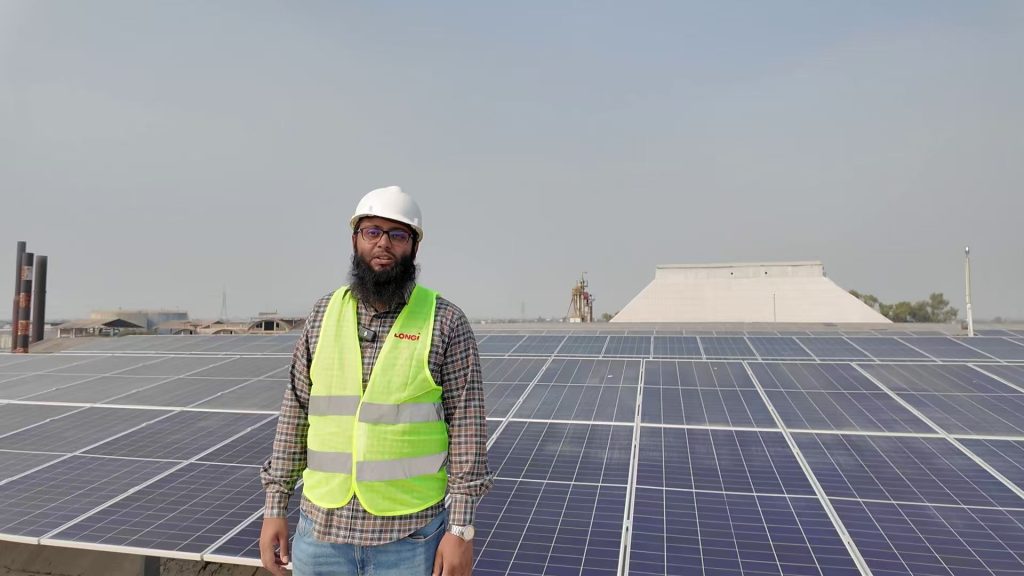
Usama Shahid, a site engineer at a solar project in Sahiwal, explained that CPEC offers a unique opportunity for Pakistan to localize PV system production. In his view, this could significantly reduce costs for end users and accelerate Pakistan’s transition toward cleaner, more stable energy sources.
Power challenges drive rapid solar adoption
Usama, who grew up in Lahore, shared that the city has enjoyed steady electricity supply over the past decade. But this stability is not uniform across the country. Many regions continue to experience high electricity prices, unpredictable power cuts, and heavy dependence on costly imported fuel.
These conditions have fueled the surge in solar installations nationwide. Residents, businesses, and industrial users increasingly view solar energy as the only reliable and cost effective alternative. According to Usama, this demand has pushed the photovoltaic sector into rapid expansion within just a few years, and its potential for further growth remains immense.
A closer look at the Sahiwal project
One of the projects demonstrating this potential is the Hi Tech Feed solar photovoltaic plant in the Arifwala Sahiwal region. With a total capacity of 3 megawatts, the project has become an important source of clean energy for the area.
“Our project saves around 12 megawatt hours of electricity every day,” Usama explained. The installation uses LONGi solar panels along with Huawei inverters, combining Chinese innovation with local engineering. He added that the system has successfully reduced pressure on local energy consumption and offered a sustainable solution to ongoing electricity challenges.
A personal journey shaped by renewable energy
Usama’s interest in photovoltaic technology began in 2018 when he joined the Energy Training and Research Centre. Since then, his career has focused on designing and commissioning efficient electrical systems. His responsibilities span from manufacturing switchgear systems to implementing photovoltaic setups and performing detailed troubleshooting and preventive maintenance for existing systems.
He describes his work as both technically rewarding and socially meaningful, emphasizing that providing electricity to underserved communities remains a powerful motivation.
Solar energy making a visible difference
In urban areas, Usama believes that solar projects have already solved nearly 60 percent of power shortage issues, thanks to grid connected systems and net metering. But the situation in rural Pakistan remains more complex. Many remote communities still depend on off grid solar setups, which play a crucial role in daily life but lack the broader benefits of a fully integrated national grid.
Usama argues that for Pakistan to maximize economic benefits, policies must focus on improving connections between remote regions and the national grid. Only then can solar solutions deliver their full potential across the country.
A future shaped by confidence and opportunity
Looking ahead, Usama sees the photovoltaic sector as one of Pakistan’s brightest opportunities for development. He believes that with the right policies, training programs, and international partnerships especially through CPEC Pakistan can reduce electricity costs, improve supply reliability, and lift millions out of energy insecurity.
“For me, this job is not just technical work,” he said. “It is meaningful because it brings power to more people. That sense of contribution is what keeps me motivated.”

