
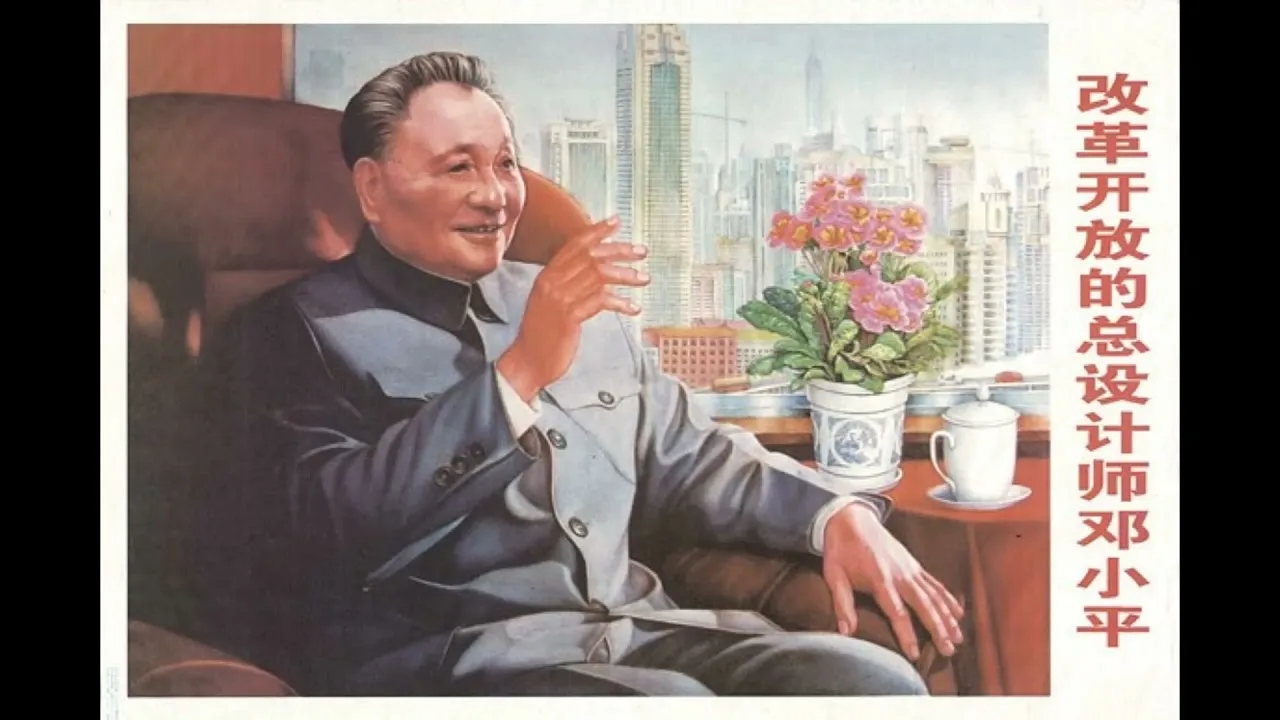
How pragmatism replaced ideology to unleash growth.
The Turning Point of 1978
After Mao’s death and the end of the Cultural Revolution, China faced economic stagnation and social fatigue. In 1978, Deng Xiaoping emerged as the architect of a new path. His call to “seek truth from facts” signaled a break with dogma. Reform and Opening was not one policy but a series of experiments that shifted China from command economy to hybrid model, introducing markets while retaining Party authority.
Agricultural Reforms First
The breakthrough began in the countryside. The “household responsibility system” allowed families to farm individual plots and sell surplus after meeting quotas. Productivity surged, lifting millions from poverty and creating the first momentum for reform. By starting with agriculture, Deng demonstrated pragmatism: fix food before tackling industry.
Special Economic Zones
Deng’s next gamble was to invite foreign investment through Special Economic Zones in Shenzhen, Zhuhai, and Xiamen. These enclaves tested capitalism within socialism, offering tax breaks and flexible rules. Skeptics saw danger, but the zones thrived, attracting factories, capital, and technology. Shenzhen grew from fishing village to metropolis, symbolizing China’s new trajectory.
Balancing Politics and Markets
Reform was never purely economic. Deng insisted that Party control remained essential, famously declaring that “it doesn’t matter whether the cat is black or white, so long as it catches mice.” This pragmatism allowed flexibility but also reinforced that political authority would not yield to market forces.
Crises tested this balance. Inflation, inequality, and corruption rose alongside growth. The 1989 Tiananmen protests highlighted tensions between political limits and social expectations. Afterward, reforms slowed briefly but revived in the 1990s as China prepared to join the World Trade Organization.
Global Consequences
Deng’s gamble reshaped global trade. China became the “world’s factory,” supplying cheap goods that lowered inflation worldwide. At the same time, integration created new geopolitical weight. Western firms gained profits, but also faced a competitor with scale and ambition.
Conclusion: Pragmatism as Revolution
Deng Xiaoping’s legacy is a reminder that revolutions can come through pragmatism as much as ideology. Reform and Opening did not abandon socialism but reinvented it, unleashing forces that transformed not only China but the global economy.

