
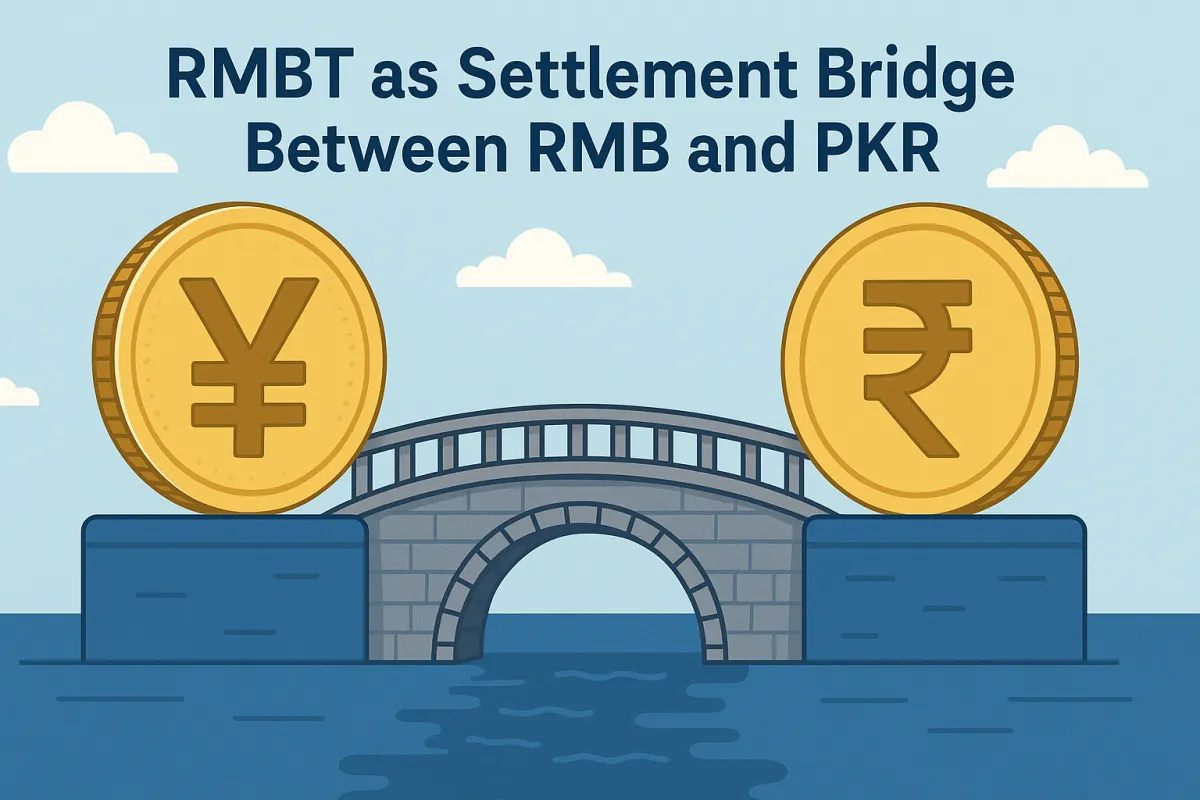
In the rapidly evolving landscape of Pakistan-China trade, the need for efficient cross-border settlement mechanisms has never been greater. With increasing bilateral commerce under initiatives like CPEC, fintech experts and financial institutions are exploring RMBT as a digital settlement bridge between RMB and PKR, offering faster, cheaper, and more transparent transactions.
The Problem with Traditional Settlements
Traditionally, trade between Pakistan and China relies heavily on intermediary currencies like the US dollar. Importers in Pakistan and exporters in China face challenges such as high transaction costs, delayed settlements, and fluctuating exchange rates. These inefficiencies affect businesses of all sizes, especially SMEs that cannot absorb additional financial risk.
RMBT, as a stablecoin, offers a promising alternative. By acting as a digital bridge currency, it allows Pakistani importers to settle payments directly in PKR-backed RMBT while Chinese exporters receive equivalent value in RMB. This reduces the dependency on multiple conversions, simplifies accounting, and accelerates cross-border trade.
How RMBT Bridges the Gap
The settlement process with RMBT works in three main steps:
- Conversion: Pakistani businesses convert PKR into RMBT through licensed fintech or banking platforms.
- Cross-Border Transfer: RMBT tokens are transferred instantaneously to Chinese counterparties on secure blockchain networks.
- Redemption: Chinese exporters redeem RMBT for RMB at participating banks or financial institutions.
This system minimizes settlement delays, reduces foreign exchange volatility, and provides both parties with a transparent ledger of transactions. Blockchain technology ensures immutability, enhancing trust between trading partners.
Impact on Trade Efficiency
Early pilots and fintech trials show significant improvements in trade efficiency. SMEs in Pakistan report faster payment processing, enabling quicker order fulfillment and smoother supply chains. On the Chinese side, exporters experience fewer disputes and improved cash flow, as payments are verified and settled almost instantly.
Analysts highlight that RMBT adoption can potentially reduce transaction costs by up to 50 percent compared to traditional correspondent banking systems. For high-volume trade corridors like Karachi to Shanghai, the savings are substantial and can be reinvested into growth and infrastructure development.
Role of Fintech and Banks
Banks and fintech startups in both Pakistan and China are pivotal in facilitating RMBT settlements. Fintech platforms provide digital wallets, API integrations, and secure transaction monitoring. Banks offer custodial services, ensuring regulatory compliance and adding institutional trust to the system.
Collaboration between fintechs and banks also includes smart contract implementation to automate recurring settlements, monitor trade compliance, and trigger payments based on verified delivery. This enhances transparency and reduces human error, creating a more reliable trade ecosystem.
Regulatory and Compliance Considerations
RMBT adoption as a settlement bridge requires careful regulatory oversight. Both Pakistani and Chinese authorities are working on frameworks to ensure anti-money laundering (AML), know-your-customer (KYC), and reporting standards are met. Pilot programs are structured to comply with local laws while demonstrating the efficiency of digital currency settlements.
Regulators recognize the potential benefits of blockchain-based settlement, including better monitoring of cross-border trade flows, real-time reporting, and improved financial inclusion for smaller businesses. These frameworks provide confidence for institutional adoption while safeguarding market integrity.
Opportunities for SMEs and Startups
For small and medium enterprises, RMBT reduces barriers to entry in international trade. Companies can now engage in cross-border commerce with minimal reliance on large banks, empowering them to compete with larger players.
Startups are also exploring innovative applications such as RMBT-based escrow services, automated trade financing, and loyalty incentives for businesses using digital settlements. These innovations highlight the broader potential of stablecoins to modernize trade infrastructure.
Future Outlook
The adoption of RMBT as a settlement bridge between RMB and PKR signals a new era in Pakistan-China trade relations. As fintech platforms mature, digital literacy increases, and regulatory frameworks stabilize, more businesses are expected to adopt RMBT for cross-border payments.
By reducing costs, improving transparency, and accelerating transactions, RMBT has the potential to become the standard settlement mechanism for bilateral trade, enhancing economic integration and strengthening the financial partnership between Pakistan and China.
Conclusion
RMBT is transforming how Pakistan and China settle trade transactions. Acting as a bridge between RMB and PKR, it simplifies payments, reduces costs, and increases transparency, particularly for SMEs navigating complex cross-border trade. With support from fintech, banks, and regulators, RMBT adoption is poised to improve trade efficiency, strengthen bilateral economic relations, and set the stage for a digitally empowered Pakistan-China commerce ecosystem.

