
The heat on the edges of North Kordofan was harsh and unforgiving, the kind that presses down on the earth until it cracks. Yet twelve year old Wali Al Din stood beneath it without complaint, a thin stick in hand as he watched over a small flock of sheep. Their slow movements were his responsibility now, and he guided them with the practiced calm of someone far older.
At an age when many children worry about homework or rush home to play games, Wali has already stepped into the world of grown men. When a sheep strayed, he nudged it back with steady patience. Every so often, he lifted his dusty jalabiya to wipe the sweat from his neck, moving with a tiredness no child should carry.
Sudan’s civil war had stripped away the softness of childhood. Six hours each day, he walked behind the sheep, thinking mostly about how their safety meant his family would have something to eat.
The flock belonged to his uncle, Mohamed Al Hassan, who took Wali in after violence shattered the life he once knew. Sitting beside a small shelter made of sticks and cloth, Al Hassan described the night everything changed.
Last October, armed fighters stormed their neighborhood. “Bullets rained on my brother Abdullah’s house like a storm,” he recounted. “Abdullah died instantly. Wali saw it happen.”
The boy had been hiding behind a sidr tree, the same place where he used to play with his sisters. From there, he watched his father run toward the house, trying to shield the family. Moments later, gunfire erupted again, and his father collapsed.
Al Hassan said the boy did not cry for hours. He sat silent and unmoving. Only days later, at the burial, did the tears come — slow, quiet, and heavy.
As fighting worsened and fears of child recruitment spread, Wali fled with a group of boys. They walked for days across empty, dangerous terrain, hiding whenever the sound of engines pierced the silence. When he finally reached his uncle’s home, all he carried was a small bag with a few clothes and a worn school notebook.
“Studying may be the only way I can change my life,” he said softly, glancing again toward the sheep.
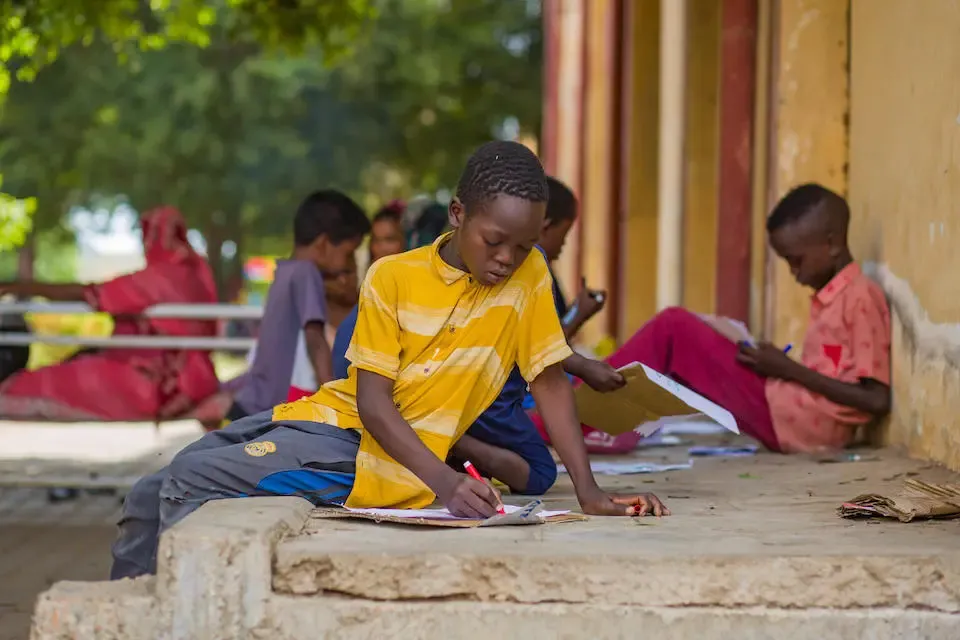
He takes the flock out each morning, then walks three kilometers to a public school with six damaged classrooms. Drone strikes have hit it more than once. One room has no roof at all.
“Wali never misses class,” said his teacher, Amira Al Nour. “No matter how exhausted he looks.”
Psychologist Asia Abdel Mahmoud says his story is heartbreakingly common. “Many children have lost family members,” she said. “They face deep emotional wounds, and poverty forces them into adult responsibilities too soon.”
Since April 2023, conflict between the Sudanese army and the Rapid Support Forces has killed tens of thousands and displaced millions. Aid groups warn that children like Wali are suffering in silence, trapped between violence and survival, with too little international help reaching them.
On World Children’s Day, Wali stood in the sand, dragging his stick in a slow line when asked about his future.
“I want to be a policeman,” he said. “So I can protect people. I don’t want any child to see what I saw.”

