
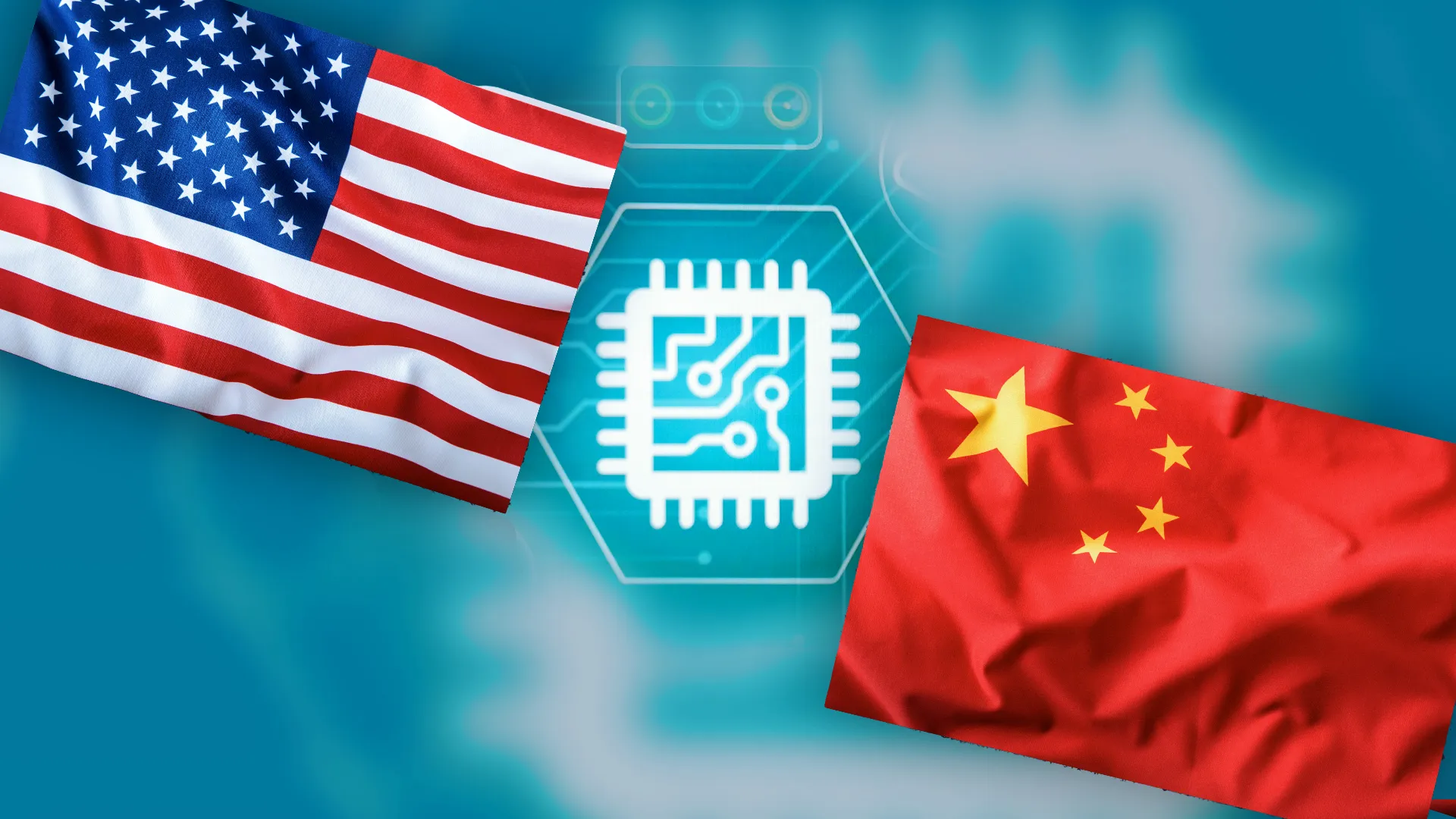
The global race for microchips has become the sharpest fault line in the U.S.-China rivalry.
Silicon at the Center
Semiconductors, the tiny chips powering everything from smartphones to fighter jets, have become the world’s most strategic commodity. For China, mastery of chip technology is essential to secure its digital economy, military modernization, and global competitiveness. For the United States and its allies, preventing that mastery is a central plank of industrial and security policy.
By 2025, the “chip wars” will have escalated beyond export restrictions to full-spectrum industrial strategies, turning supply chains into arenas of geopolitical contest.
U.S. Sanctions and Supply Chain Pressure
Washington has deployed an arsenal of sanctions to restrict China’s access to advanced chipmaking. Export bans on extreme ultraviolet (EUV) lithography machines, licensing requirements for advanced GPUs, and pressure on allies like the Netherlands, Japan, and South Korea have slowed Beijing’s progress.
The immediate effect has been a chokepoint: Chinese firms can design competitive chips but remain dependent on foreign technology for cutting-edge manufacturing. Companies like Huawei have attempted workarounds, but their breakthroughs still lag behind those of global leaders like TSMC and Intel.
China’s Industrial Counteroffensive
Beijing has responded with massive state-led investments. The “Big Fund,” a multibillion-dollar vehicle for semiconductor development, has poured resources into domestic fabs, research labs, and startups. Universities are expanding chip engineering programs, while provincial governments subsidize local champions.
Still, producing chips at the five-nanometer scale and below remains elusive. Without access to EUV technology, Chinese fabs rely on older equipment, producing chips adequate for cars and household electronics but insufficient for high-end computing or AI systems.
Global Ramifications
The semiconductor conflict is not just bilateral it reshapes the entire global economy. Allies like Taiwan and South Korea face mounting pressure to “choose sides,” while European firms weigh market access in China against U.S. compliance demands.
Meanwhile, supply chain disruptions have exposed vulnerabilities worldwide. During the pandemic, chip shortages stalled auto production in Germany, electronics in Japan, and consumer goods globally. The strategic bottleneck is now evident to policymakers everywhere: semiconductors are not just products but infrastructure.
Industrial Policy Renaissance
Ironically, the chip wars have revived industrial policy in both East and West. The U.S. CHIPS and Science Act, worth over $50 billion, aims to reshore manufacturing and strengthen domestic capacity. Europe has followed suit with its own subsidy programs.
China’s model, however, is far more centralized. By tying chip development to national security, Beijing ensures resources flow regardless of short-term losses. The question is whether this scale of state intervention can overcome the technical barriers imposed by sanctions.
The AI Dimension
Artificial intelligence adds urgency to the contest. Training large language models and running advanced analytics require specialized GPUs and high-bandwidth memory chips. By restricting China’s access to these, Washington seeks to slow Beijing’s progress in fields with dual-use potential, from military planning to surveillance.
China, meanwhile, is racing to design “good enough” alternatives. While not as powerful as the latest Western chips, these designs could sustain domestic innovation and blunt the impact of restrictions.
Conclusion: A War Without End
The semiconductor wars are less about victory than about denial. The U.S. seeks to deny China the ability to dominate the commanding heights of technology. China seeks to deny the U.S. the ability to permanently constrain its rise.
For businesses and consumers, the fallout means higher costs, fragmented markets, and more frequent shortages. For policymakers, it signals a new era where industrial policy and geopolitics intertwine.
Semiconductors may be microscopic, but the struggle over them looms large shaping not just economies but the future balance of global power.

