
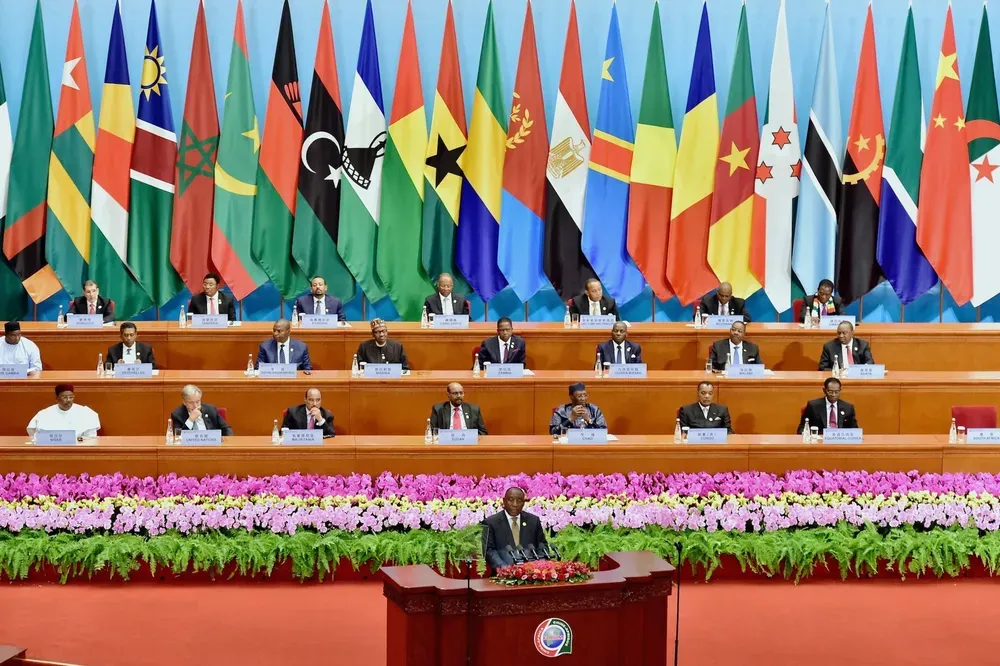
A special symposium was held in Cape Town on Monday to celebrate the twenty fifth anniversary of the Forum on China Africa Cooperation, a milestone that reflects the growing depth of the relationship between China and African nations. The event was jointly organized by South Africa’s Inclusive Society Institute and Zhejiang Normal University, bringing together scholars, policymakers and representatives from both sides for discussions at the First Nations Heritage Center.
During the gathering, participants explored the evolution of FOCAC and the broader context of China Africa cooperation. In his keynote address, ISI Chief Executive Daryl Swanepoel described FOCAC as a defining pillar of modern South South cooperation. He said the platform gives African countries more influence in shaping their development partnerships, while also demonstrating China’s commitment to a model of global development rooted in sustainability, mutual benefit and shared learning.
Liu Hongwu, director of the Institute of African Studies at Zhejiang Normal University, emphasized the important role South Africa plays in China Africa relations. He noted that both sides work closely not only through FOCAC but also through regular high level interactions that deepen understanding and build long term partnerships. Liu added that such in person engagements are essential for strengthening ties and promoting a more inclusive future.
Wang Xiao, the acting consul general of China in Cape Town, highlighted how FOCAC has expanded over the past twenty five years into a comprehensive platform that now covers political dialogue, trade, infrastructure, investment, culture, education, public health and peace and security. She said the cooperation has delivered meaningful benefits for people in China and Africa and has become an important symbol of South South collaboration. According to Wang, the partnership is built on mutual respect, equality and a shared commitment to development rather than external pressure or ideological rivalry.
ISI Deputy Chairperson Buyelwa Sonjica, a former South African minister of water and environmental affairs, stressed the significance of recognizing both the visible and less tangible achievements of FOCAC. She described China Africa ties, and especially the relationship between China and South Africa, as among the most influential for both regions across political, economic and social domains.
Odile Bulten, coordinator of the Africa ISI Think Tank Dialogue, noted that the platform has grown beyond its early focus on political and economic cooperation. Over the past two decades, FOCAC has increasingly embraced educational initiatives, cultural programs and people to people exchanges, helping to strengthen bonds between communities.
The symposium served as an opportunity for reflection and forward looking dialogue as China and African countries prepare for the next phase of cooperation. Participants agreed that continued engagement will be essential in shaping a shared future grounded in partnership and mutual progress.

