
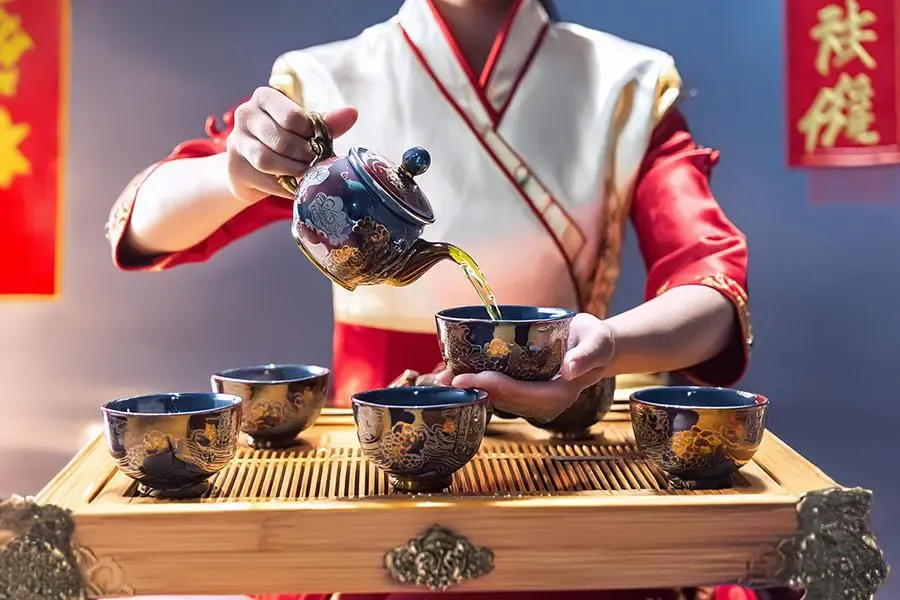
Tea holds an iconic place in Chinese culture, woven into daily routines, social customs and ceremonial practices. With a history stretching back more than four thousand years, tea is one of China’s oldest cultural symbols. According to legend, Emperor Shennong discovered tea when wind swept leaves into his cup of hot water. Known for his interest in medicinal plants, he tasted the infusion and realized its refreshing qualities. From that moment, tea began its long journey through Chinese history, gaining popularity among scholars, nobles and eventually everyday families.
Traditions behind the teacup
Chinese tea culture involves far more than simply drinking tea. One fascinating custom is the tapping gesture often seen during tea ceremonies. Part of the Gongfu Cha tradition, tapping the table is a polite signal rather than a decorative gesture. When someone taps while receiving tea, it alerts the person pouring to stop at the right moment, ensuring the cup is filled properly without spilling. This small ritual also helps evenly distribute heat from the teapot, protecting both flavor and temperature. Gongfu Cha is commonly practiced during special occasions and when honoring guests, reflecting the respect and care embedded in Chinese tea culture.
The rise of boba tea and modern tea trends
While China’s traditional teas remain timeless, new tea inspired drinks have captured global attention. Boba tea, also known as bubble tea, originated in Taiwan in the 1980s and has since become a worldwide phenomenon. The drink blends milk tea with chewy tapioca pearls, offering both a distinctive flavor and a playful texture. With countless variations, toppings and sweetness levels, boba tea appeals to all ages and reflects how traditional tea culture continues to evolve. Often served cold, it has become a favorite treat for hot days and a symbol of modern Asian beverage culture.
Why tea follows the meal
In many Chinese households and restaurants, serving tea after a meal is almost automatic. This custom is based on the belief that tea aids digestion, reduces the feeling of heaviness and helps cleanse the palate. Pu erh tea, in particular, is celebrated for its detoxifying properties and its ability to balance rich, oily foods. Drinking tea after eating is not only soothing but also a gentle way to support the digestive system.
The meaning behind colored teas
Chinese tea is categorized by color, a reflection of the specific processing methods each type undergoes. These methods influence flavor, aroma and the health benefits associated with each tea.
Green tea maintains its vibrant color because the leaves are lightly processed. Fresh and grassy, it is rich in antioxidants and linked to reduced inflammation and disease risk.
Black tea undergoes full oxidation, giving it a deep color and robust flavor. It is valued for its calming properties and ability to provide a natural energy boost without the intensity of coffee.
White tea is the least processed of all teas, boasting a delicate taste and pale hue. Its gentle production preserves natural compounds associated with immunity support and overall wellness.
Yellow tea sits between green and black in flavor, offering a mellow sweetness. Its soothing qualities make it a popular choice for stress relief as well as general health.
Celebrating tea with others
Sharing tea in China is an experience filled with hospitality, attentiveness and artistry. Whether meeting friends, visiting someone’s home or attending a formal gathering, the preparation and presentation of tea reflect the host’s appreciation for the guest. The pouring, smelling and sipping are all part of an immersive ritual celebrating connection and respect.
For those who wish to dive deeper into Mandarin and cultural traditions, studying in China offers an invaluable opportunity. Programs such as those at Omeida Chinese Academy in Yangshuo provide immersive language learning paired with firsthand cultural experiences, including tea appreciation.

