

Telecom and digital infrastructure are pivotal for Pakistan’s urban modernization and economic growth. China-Pakistan collaboration in 5G technology and smart city initiatives under the China-Pakistan Economic Corridor (CPEC) is transforming cities by enabling faster connectivity, efficient public services, and integrated urban management. These projects support e-governance, industrial automation, and digital trade, positioning Pakistan as a regional hub for advanced telecommunications.
Overview of 5G Collaboration
China’s leading telecom firms, including Huawei and ZTE, are partnering with Pakistan Telecommunication Company Limited (PTCL) and other local operators to deploy 5G networks in key urban centers. The collaboration aims to:
- Expand high-speed mobile broadband coverage
- Support smart city applications such as AI-enabled traffic management and energy monitoring
- Integrate IoT networks for industrial and municipal services
Pilot projects have commenced in Islamabad, Karachi, and Lahore, serving as testbeds for nationwide deployment.
Infrastructure and Network Development
5G deployment requires advanced infrastructure, including high-capacity fiber optic networks, small cell towers, and edge computing facilities. Chinese expertise ensures rapid installation, network optimization, and integration with existing 4G infrastructure.
Additionally, urban IoT networks are being deployed to monitor utilities, traffic, and public safety systems in real time. These networks enable city planners to analyze data and implement efficient solutions for transportation, energy, and waste management.
Impact on Smart Cities
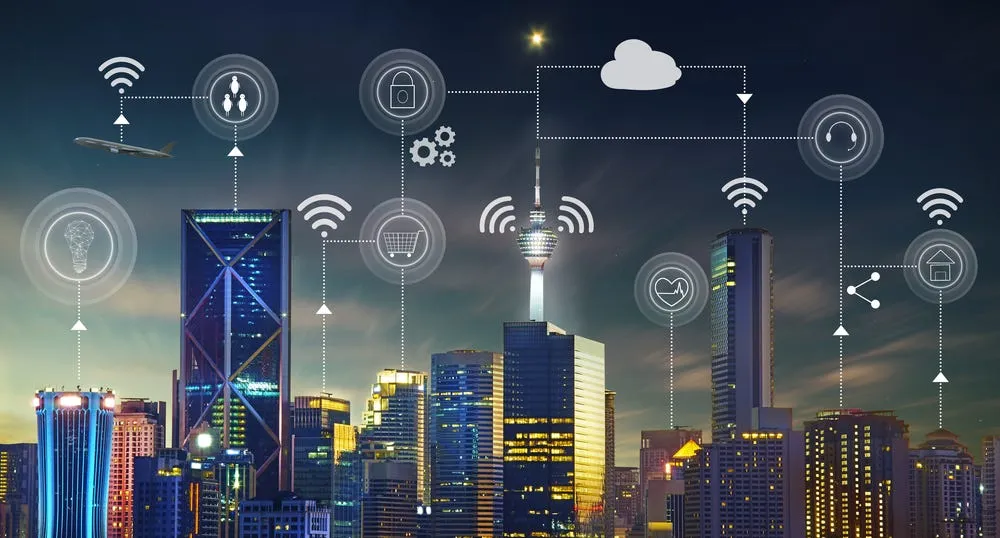
5G and telecom collaboration facilitate multiple smart city applications:
- Traffic and Transport Management: AI-powered traffic lights, route optimization, and congestion monitoring improve commuting efficiency.
- Energy Efficiency: Smart meters, grid monitoring, and predictive maintenance reduce energy wastage and lower operational costs.
- Public Services: Real-time data supports waste management, emergency response, and public safety initiatives.
- Industrial Automation: High-speed connectivity enables factories and logistics hubs to operate efficiently with automated processes and remote monitoring.
These applications enhance the quality of urban life while supporting economic growth and industrial competitiveness.
Digital Trade and Economic Integration
Enhanced telecom infrastructure enables digital trade by supporting e-commerce platforms, cross-border payment systems, and real-time logistics tracking. SMEs benefit from fast and reliable connectivity, which allows them to expand online operations, integrate with Chinese marketplaces, and participate in CPEC trade initiatives.
By linking smart cities to industrial zones and ports, telecom collaboration ensures seamless data flow, operational efficiency, and traceability across supply chains.
Investment and Policy Support
China and Pakistan are investing heavily in 5G deployment and smart city infrastructure. Key measures include:
- Joint financing for network installation and IoT integration
- Public-private partnerships for sustainable operations
- Regulatory alignment to facilitate spectrum allocation, safety standards, and digital governance
Government initiatives encourage innovation, foreign investment, and technology transfer, creating a supportive environment for telecom development.
Challenges and Considerations
Despite progress, several challenges must be addressed:
- Network Security: Protecting data integrity and preventing cyber threats is critical for smart city systems.
- Digital Literacy: Training personnel to operate advanced networks and interpret data is essential.
- Infrastructure Maintenance: Ensuring continuous service in urban and remote areas requires investment in maintenance and upgrades.
- Policy Coordination: Aligning federal, provincial, and municipal regulations for efficient implementation is vital.
Addressing these challenges ensures sustainable and secure growth of telecom-enabled smart city initiatives.
Future Outlook
The Pakistan-China 5G collaboration is expected to expand nationwide over the next five years. Upcoming developments include:
- Expansion of 5G coverage to mid-sized cities and industrial zones
- Integration of AI-driven predictive analytics for urban management
- Deployment of autonomous vehicles and smart transport solutions
- Use of blockchain-enabled digital identity and payment systems for e-governance
Analysts predict that full-scale 5G deployment will significantly enhance productivity, reduce operational costs, and support Pakistan’s transition to a technology-driven economy.
Conclusion
Telecom and 5G collaboration between China and Pakistan is laying the foundation for smart cities, advanced industrial operations, and efficient digital trade. By integrating high-speed networks, IoT systems, and AI-driven analytics, Pakistan is improving urban management, supporting industrial growth, and strengthening cross-border trade capabilities. Continued investment, policy support, and technological innovation will ensure that these projects deliver sustainable economic and social benefits, positioning Pakistan as a regional leader in digital infrastructure.

