
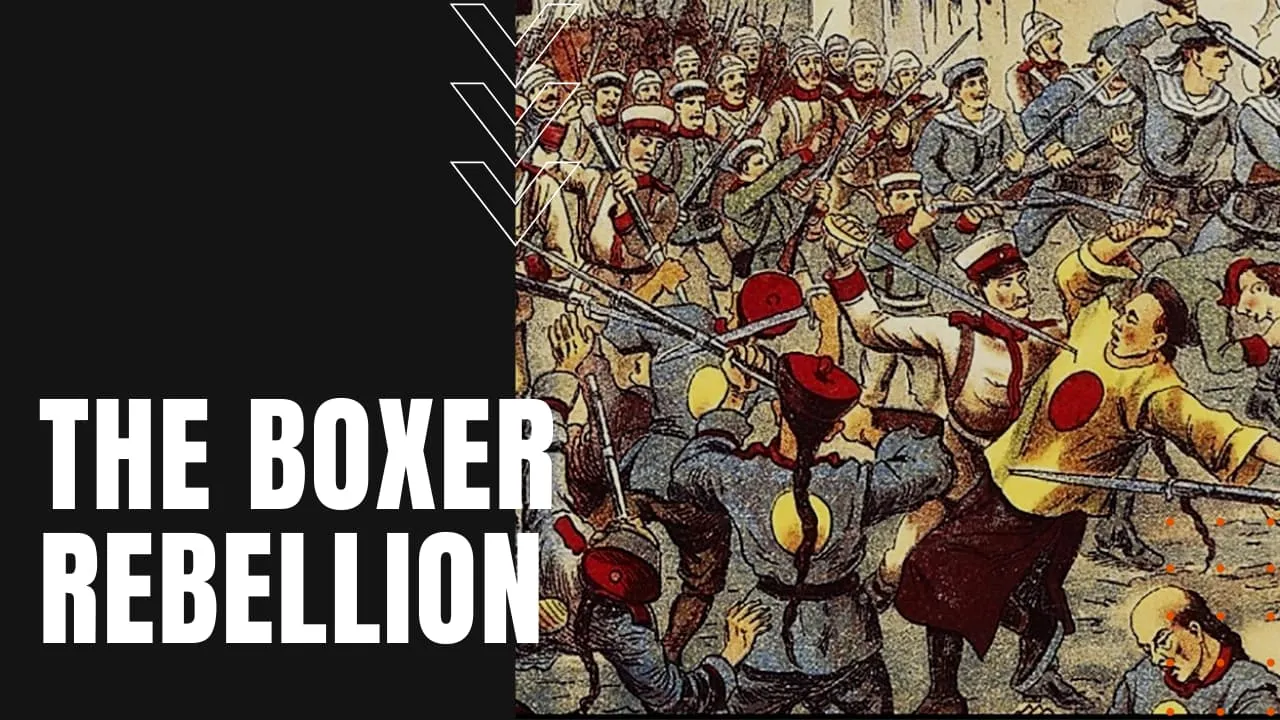
How grassroots militancy reshaped China’s encounter with the world.
Roots of Discontent
By the late 19th century, China faced foreign spheres of influence, missionary expansion, and economic exploitation. In northern provinces, drought and poverty deepened resentment. Out of this unrest emerged the “Boxers,” groups practicing martial rituals and claiming spiritual invulnerability to bullets. They directed their anger at missionaries, converts, and foreign businesses, seeing them as symbols of humiliation.
From Local Violence to National Crisis
At first, the Qing court hesitated, viewing the Boxers as unruly peasants. But as unrest spread, conservative officials saw an opportunity. They argued that channeling anti foreign anger could strengthen Qing legitimacy. By 1900, Boxers converged on Beijing, attacking churches and embassies.
The court’s eventual support escalated the crisis. Foreign powers responded with an eight nation alliance that invaded China, captured Beijing, and imposed the harsh Boxer Protocol of 1901. The rebellion left tens of thousands dead and deepened foreign control over Chinese finances and territory.
Symbolism and Memory
Although militarily crushed, the Boxers became symbols of resistance. For later nationalists, they represented raw energy misdirected by superstition but rooted in genuine patriotism. For revolutionaries, they were evidence that ordinary people could challenge foreign domination even if the outcome was tragic.
Lessons for the Qing Dynasty
The rebellion exposed the Qing court’s weakness. Unable to balance popular anger with effective strategy, it alienated both reformers and conservatives. The indemnities imposed by the Boxer Protocol drained state finances, accelerating decline. Within a decade, the dynasty collapsed.
Conclusion: Fury Without Strategy
The Boxer Rebellion shows how grassroots militancy can shake empires but also how fury without strategy can end in disaster. Its memory remains contested, embodying both resistance and tragedy in China’s path to modern statehood.

