
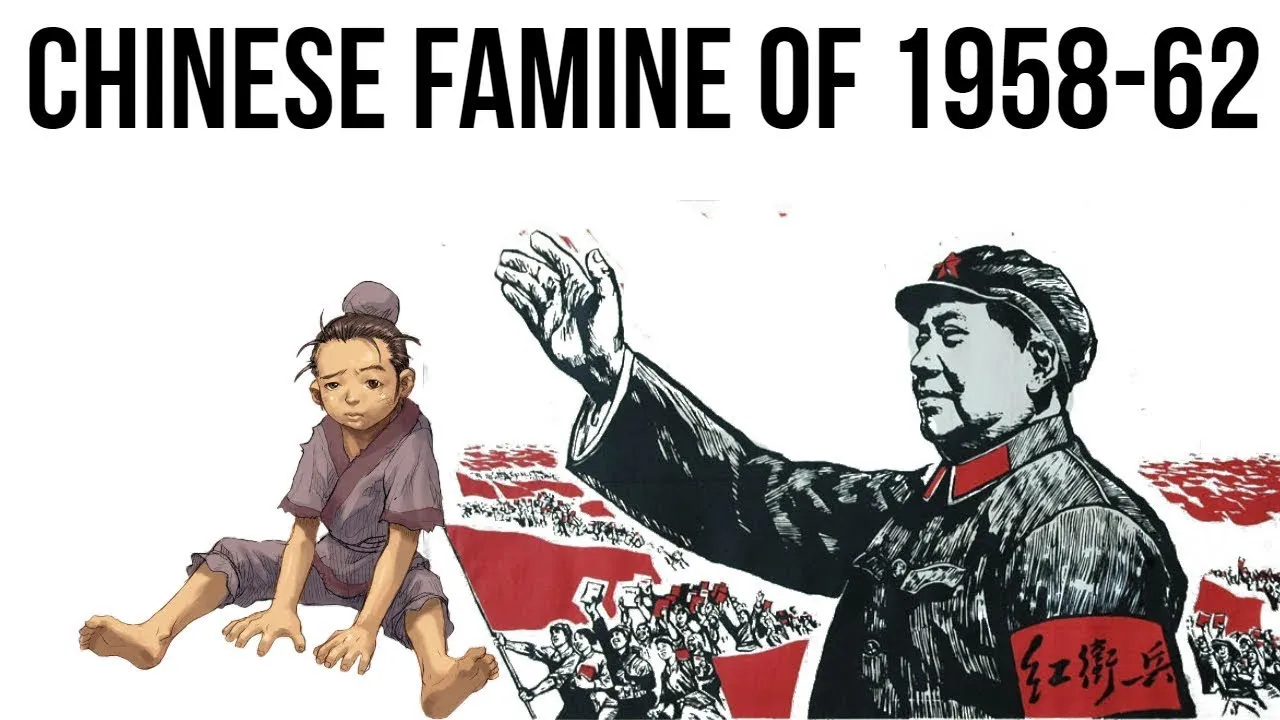
A catastrophe that scarred a generation and reshaped the nation’s relationship with food, power, and memory.
The Roots of Disaster
In the late 1950s, China launched the Great Leap Forward, an ambitious campaign led by Mao Zedong to rapidly industrialize and overtake Western economies. Villages were reorganized into massive communes, steel furnaces were built in backyards, and farmers were ordered to abandon traditional practices in favor of collectivized experiments.
At first, the campaign was hailed as revolutionary. But by 1959, cracks were visible. Unrealistic quotas, inflated harvest reports, and political pressure to “outperform” created the illusion of abundance. In reality, granaries were emptying, and the countryside was heading toward crisis.
The Human Toll
Between 1959 and 1961, China experienced one of the deadliest famines in modern history. Scholars estimate that between 20 and 30 million people perished. Entire villages withered as hunger spread, leaving survivors with memories of unbearable loss.
In many regions, people resorted to eating tree bark, wild grass, and even clay. Families fractured under impossible choices. Stories of starvation remain whispered in rural communities, passed down as private grief rather than public history.
Silence and Censorship
The famine remains one of the most sensitive topics in China’s modern history. Official accounts for decades attributed the tragedy to natural disasters, downplaying the role of policy failures. Archives remain restricted, and open discussion is rare within China.
Yet oral histories collected by scholars reveal a more complex picture. Survivors describe not only natural hardship but also the suffocating political climate that discouraged truth-telling. Local officials feared punishment for reporting poor harvests, leading to inflated numbers that deepened shortages.
Lessons of Scarcity
The Great Famine left lasting cultural imprints. For decades afterward, Chinese families emphasized frugality, hoarding food, and ensuring children never went hungry. Even today, elders who lived through the famine keep pantries full, wary of scarcity returning.
At the policy level, the famine influenced China’s later leaders to prioritize agricultural stability. Reforms in the late 1970s under Deng Xiaoping restored incentives for farmers and decentralized food production, lessons drawn directly from the disaster.
Memory and Controversy
Remembering the famine remains contested. Some survivors push for recognition, seeking acknowledgment of suffering. Others prefer silence, either from trauma or fear of political consequences. In literature and film, the famine is hinted at rather than depicted directly, reflecting the difficulty of confronting collective tragedy.
For historians, the famine is not only a story of hunger but of power: how centralized authority, when unchecked, can magnify mistakes into catastrophe. It remains a warning about the dangers of ideology overriding reality.
Conclusion: The Weight of Silence
The Great Famine was not just a failure of harvests but a failure of governance and truth. Its scars linger in private memories, shaping cultural attitudes toward food, trust, and authority.
Revisiting the famine is an act of remembrance. It reminds us that progress is fragile, that policies have human consequences, and that silence often hides the deepest wounds. Remembering China’s silent tragedy is essential, not only for honoring those who suffered but for ensuring history’s lessons are not forgotten.

