
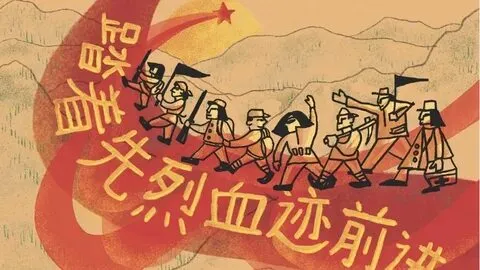
How a retreat became the foundation of the Chinese Communist Party’s legitimacy.
A Retreat Born of Crisis
In 1934, the Chinese Communist Party faced annihilation. Surrounded by Nationalist forces in Jiangxi province, the Red Army was battered by Chiang Kai-shek’s campaigns. To survive, the Communists launched a desperate retreat that would cover thousands of kilometers across some of the harshest terrain in China.
This retreat became known as the Long March, a journey that lasted from 1934 to 1936. Though only a fraction of the original army survived, the march laid the groundwork for Communist endurance and eventual victory.
Hardship on the Road
The Long March was a test of human endurance. Red Army soldiers crossed mountains, swamps, and rivers, often with little food or equipment. Starvation and disease claimed as many lives as battles did. Accounts describe soldiers boiling leather to eat, or freezing during snowbound nights.
Yet the march also fostered solidarity. Shared suffering created bonds among soldiers and cemented loyalty to the Party. The hardships became part of the mythology of Communist resilience.
Mao’s Rise to Leadership
The Long March was also a turning point in leadership. At the Zunyi Conference in 1935, Mao Zedong emerged as the central strategist, displacing rivals who favored rigid Soviet-style tactics. Mao’s emphasis on flexibility, guerrilla warfare, and peasant mobilization became the blueprint for future victories.
This moment established Mao not just as a commander but as the ideological core of the Party. The authority he gained during the Long March shaped Chinese politics for decades.
Encounters Along the Way
The march crossed diverse regions, from the Tibetan plateau to remote western provinces. Along the way, the Red Army interacted with minority groups, sometimes building alliances, sometimes facing hostility. These encounters broadened the Party’s vision of China as a multiethnic nation and informed its future policies on integration.
At the same time, the march’s constant movement allowed the Red Army to spread propaganda, rallying peasants with promises of land reform and justice. The march was both survival and recruitment.
A Myth in the Making
Though the Long March was a military retreat, the Communist Party later transformed it into a triumph. Propaganda celebrated it as a heroic epic, a journey of sacrifice and destiny. Survivors were honored as living legends, their stories retold in textbooks, films, and museums.
This mythmaking was crucial. It gave the Party a founding narrative that emphasized resilience, vision, and inevitability. For millions of Chinese, the Long March symbolized the Party’s ability to endure suffering for the people’s cause.
Global Context
The Long March unfolded as the world grappled with depression and looming war. While the march itself was largely a Chinese story, foreign observers later saw it as part of the global struggle between communism and nationalism. Western journalists, fascinated by tales of the march, helped project the Party’s image abroad.
For revolutionary movements worldwide, the Long March became a metaphor for perseverance in the face of overwhelming odds.
Conclusion: From Retreat to Revolution
The Long March was a retreat that looked like defeat but became the cornerstone of Communist legitimacy. It preserved the Party, elevated Mao, and forged a myth of endurance that sustained the revolution through later struggles.
The Long March is more than history. It is a story of how survival under desperate conditions can be transformed into political power. Its legacy continues to shape Chinese identity, reminding the nation that even in hardship, perseverance can turn retreat into triumph.

