
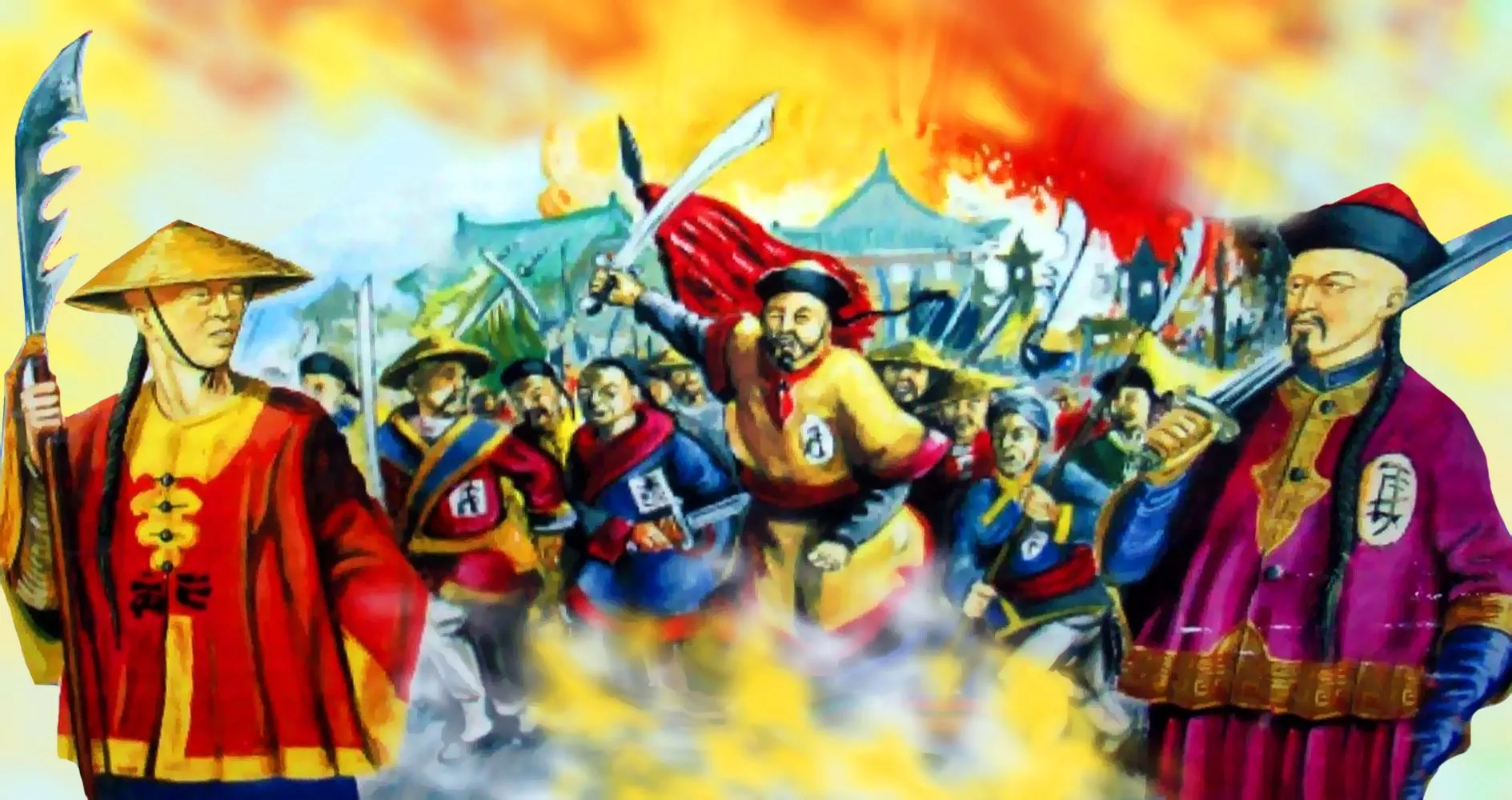
A civil war of unprecedented scale that reshaped China’s 19th-century destiny.
A Vision of Heaven on Earth
In the mid-19th century, as Western powers encroached on China and the Qing dynasty struggled with corruption and decline, a radical movement rose from the country’s southern provinces. Led by Hong Xiuquan, a failed scholar who proclaimed himself the younger brother of Jesus Christ, the Taiping Rebellion promised to build a “Heavenly Kingdom of Great Peace.”
At its height, the movement drew millions of followers disillusioned with Qing rule. Hong’s vision combined Christian millenarianism with Confucian egalitarian ideals, appealing to peasants burdened by poverty, high taxes, and natural disasters. For many, the Taiping promise of equality, land reform, and spiritual salvation offered hope in a collapsing world.
War on an Unimaginable Scale
The rebellion, which began in 1850, quickly grew into one of the deadliest civil wars in human history. Taiping forces captured Nanjing in 1853, renaming it Tianjing the Heavenly Capital and declared it the seat of their new kingdom. From there, armies marched across China’s heartland, clashing with Qing troops and foreign mercenaries.
The scale of violence was staggering. Entire towns were razed, and millions perished in battles, famines, and disease outbreaks triggered by the conflict. Estimates suggest that 20 to 30 million lives were lost a toll surpassing many modern wars.
Faith and Discipline
Unlike the opium dens and corruption associated with Qing authority, the Taiping regime enforced strict codes of conduct. Alcohol, opium, gambling, and prostitution were banned. Men and women were segregated, with military-style discipline imposed on daily life.
Hong Xiuquan’s theological authority drove both loyalty and fear. Followers saw him as divinely chosen, while dissent was crushed brutally. For many observers, the Taiping experiment was at once revolutionary and authoritarian, mixing utopian ideals with rigid control.
The Qing Response and Foreign Interests
The Qing dynasty, already weakened by defeats in the Opium Wars, initially faltered in suppressing the rebellion. But by the late 1850s, with the support of regional militias led by figures like Zeng Guofan and foreign-trained forces such as the “Ever Victorious Army” under Frederick Townsend Ward and Charles Gordon, the tide began to turn.
Western powers, though wary of Qing weakness, ultimately chose stability over revolution. The Taiping vision of overturning Confucian hierarchy and rejecting foreign trade threatened both their influence and profits. Thus, foreign guns and advisors quietly tilted the balance back in favor of the dynasty.
Collapse of the Heavenly Kingdom
By 1864, after a decade and a half of brutal conflict, the Qing recaptured Nanjing. Hong Xiuquan died during the siege, reportedly from illness or possibly suicide. His followers fought to the bitter end, but the Heavenly Kingdom crumbled in fire and blood.
The aftermath left the Qing dynasty standing, but at enormous cost. The empire’s finances were drained, its legitimacy shattered, and its reliance on regional warlords entrenched. Far from restoring strength, the victory revealed deep fractures that would haunt the dynasty until its eventual fall in 1911.
Legacy of the Rebellion
The Taiping Rebellion was more than a failed uprising; it was a turning point in China’s modern history. It revealed the explosive power of religious and social discontent, foreshadowed the rise of mass movements, and demonstrated the vulnerability of imperial authority.
For later revolutionaries from Sun Yat-sen to Mao Zedong the rebellion stood as a reference point: a cautionary tale of both radical ambition and tragic collapse.
Conclusion
The Taiping Rebellion remains one of the most extraordinary and devastating chapters in China’s past. Its mix of spiritual zeal, social revolution, and military might reshaped the 19th century and left scars that influenced generations.
In today’s China, the rebellion is remembered less for its theology and more for its sheer scale, a reminder of how deeply popular movements can shake the foundations of power. It was, in every sense, a civil war of faith and fire that fractured an empire already on the brink.

