
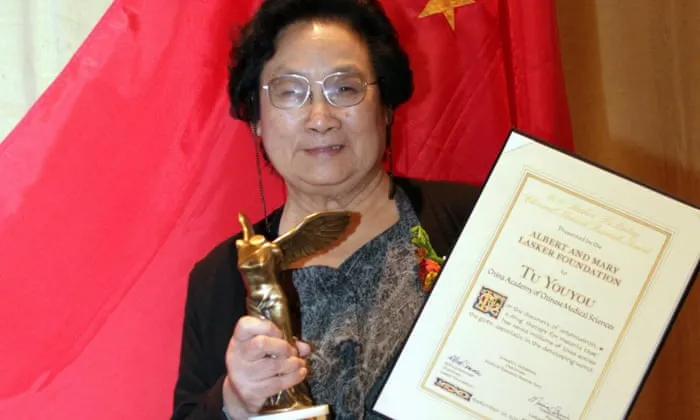
A scientist who bridged tradition and modern research to fight malaria.
Searching for a Cure
In the late 1960s, during the height of the Vietnam War, malaria posed a deadly challenge. Soldiers on both sides fell to the disease, and global health systems struggled with strains resistant to common treatments. In China, Project 523 was launched as a top secret program to find new cures. Among the researchers was Tu Youyou, a pharmacologist trained in both modern science and traditional medicine.
She approached the task with curiosity and determination, convinced that solutions might be hidden in centuries old texts. Where others dismissed tradition as superstition, she saw a vast archive of human trial and error waiting to be tested with modern methods.
Rediscovering Artemisinin
Tu and her team scoured ancient manuscripts, compiling hundreds of herbal remedies described for fever and chills. One reference to sweet wormwood (Artemisia annua) caught her attention. Previous experiments with boiling extracts had failed. Re reading the text, Tu noticed instructions to soak the herb in cold water. Inspired, she altered the extraction method, using ether at low temperature to preserve active compounds.
The breakthrough arrived in 1972. The extract showed powerful antimalarial effects in animals, and soon in humans. The active compound was isolated and named artemisinin. This discovery changed the global fight against malaria, providing an effective treatment where older drugs had failed.
A Nobel Recognition
For decades, Tu’s work remained little known outside China. Only in the 1990s, when artemisinin based therapies spread globally through the World Health Organization, did her contribution receive broader attention. In 2015, Tu Youyou was awarded the Nobel Prize in Physiology or Medicine, the first Chinese scientist to receive the award for work conducted entirely in China.
Her recognition was not only a personal triumph but also validation of a research model that bridges traditional knowledge with modern science. By taking ancient clues seriously yet testing them rigorously, she pioneered a method of innovation grounded in both respect and evidence.
Challenges Along the Way
Tu Youyou’s path was not easy. She worked with limited resources, under political and social pressures of the Cultural Revolution. Laboratories lacked equipment, and secrecy rules isolated researchers from global collaboration. She even tested extracts on herself before moving to patient trials, a decision that reflected both urgency and personal courage.
Recognition within China came slowly. For years she held no high academic rank, partly due to the collaborative nature of the project and partly because her methods straddled disciplines that did not fit neat categories. Yet her persistence ensured that the discovery endured even without early accolades.
Impact Beyond Malaria
Artemisinin based combination therapies remain frontline treatments today, credited with saving millions of lives worldwide, particularly in Africa and Southeast Asia. The discovery reshaped global health strategies, proving that partnerships with local knowledge could yield breakthroughs in the fight against infectious diseases.
Tu herself advocated for further exploration of traditional pharmacopeias. She argued that respect for history should not mean uncritical acceptance but careful testing. Her model encouraged scientists to mine cultural heritage for insights while adhering to the strictest scientific standards.
A Hero of Science and Humanity
Tu Youyou became a symbol of humility in science. She often emphasized that the award belonged to the team and to generations of anonymous physicians who recorded remedies in ancient texts. For young researchers, her life offered a lesson in persistence: groundbreaking discoveries often begin with ideas dismissed as marginal.
Her work also illustrated the value of scientific sovereignty. At a time when China was isolated, she proved that world changing contributions could arise from local initiative, inspiring later generations of Chinese scientists to pursue global leadership in medicine.
Conclusion
Tu Youyou’s story is a reminder that innovation often grows where old and new meet. Ancient manuscripts became modern lifelines because one scientist chose to read carefully, experiment rigorously, and persevere through adversity. The hybrid path she forged between tradition and science continues to guide medical research today.
Her legacy is not only the millions of lives saved from malaria but also the enduring idea that wisdom across centuries can be renewed through curiosity, courage, and evidence.

