
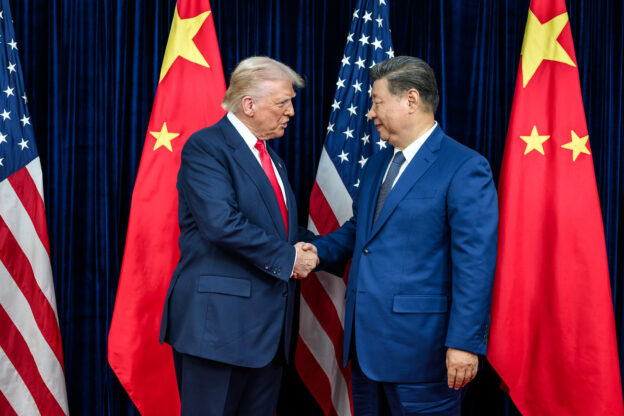
Recent political discussions in the United States have revived the old concept of establishing a G2 arrangement between Washington and Beijing. Supporters of the idea argue that the world’s two largest economies should work together at the highest strategic level to manage global challenges. Yet China continues to show little interest in such a proposal, and analysts say there are several deep rooted reasons behind this reluctance.
For Beijing, the idea of a G2 partnership carries a strong perception of a political trap. Chinese officials and scholars argue that the concept places both countries on an equal platform only on the surface, while allowing the United States to shape the rules, set the agenda, and ultimately maintain global dominance. According to this view, accepting a G2 would limit China’s strategic choices and reduce its ability to build partnerships with developing nations and emerging powers.
Historical memory also plays a significant role in China’s position. Beijing has long emphasized the importance of national sovereignty and non interference, shaped by a history of foreign pressure and unequal agreements during the nineteenth and early twentieth centuries. Any arrangement that appears to place China in a subordinate or constrained role triggers concerns about repeating past patterns of external influence. For this reason, Chinese leaders prefer multilateral frameworks where power is more evenly distributed.
Ideology further deepens the divide between the two countries. The United States promotes a liberal political model that prioritizes individual freedoms, electoral competition, and open political expression. China’s governance system emphasizes social stability, collective development, and centralized leadership. These differences influence how both sides view global governance. Chinese scholars argue that a G2 would embed U.S. ideological expectations into the partnership, potentially challenging China’s political system and domestic priorities.
Realism in foreign policy is another major factor. China’s long term strategy focuses on building a broad network of relationships across Asia, Africa, Latin America, and the Middle East. Beijing seeks a multipolar world where power is shared among many states rather than concentrated in two superpowers. A G2 arrangement would undermine this multipolar vision and position China as one half of a global leadership pair that carries responsibility for managing international crises, many of which are not directly connected to China’s interests.
Furthermore, Chinese experts point out that Washington’s approach to China has alternated between cooperation and pressure in recent years. Issues such as trade, technology controls, military tensions in the Asia Pacific region, and political disagreements have eroded trust. From Beijing’s perspective, accepting a G2 framework without stable long term commitments from the United States would be risky and unrealistic.
Overall, China’s resistance to the G2 concept stems from a combination of historical sensitivity, ideological differences, and strategic caution. Beijing prefers a global order shaped by shared responsibility rather than a structure dominated by two major powers. As long as these factors remain unchanged, China is unlikely to embrace the idea of a G2 partnership, regardless of who proposes it.

