
China Reaffirms Its Global Innovation Role
China has reiterated its intention to remain a major contributor to global science and technology advancement while supporting broader economic development worldwide. Speaking at a regular press briefing, a spokesperson from the Chinese Foreign Ministry said the country will continue accelerating innovation and expanding international cooperation. The message reflects Beijing’s effort to position technological progress not only as a national priority but also as a shared global benefit.
This commitment comes at a time when technology is increasingly central to economic competitiveness, productivity growth, and solutions to global challenges. China’s leadership sees science and innovation as tools that can generate public goods extending beyond national borders.
Innovation as a Shared Global Resource
According to officials, China’s approach to technology development emphasizes openness and collaboration. Rather than limiting innovation to domestic use, policymakers argue that breakthroughs in areas such as digital infrastructure, artificial intelligence, and advanced manufacturing can support global supply chains and economic resilience.
This perspective aligns with China’s broader diplomatic narrative that frames development as interconnected. By investing in innovation and sharing outcomes through partnerships, China aims to contribute to a more inclusive global technology ecosystem.
Recognition From Global Financial Institutions
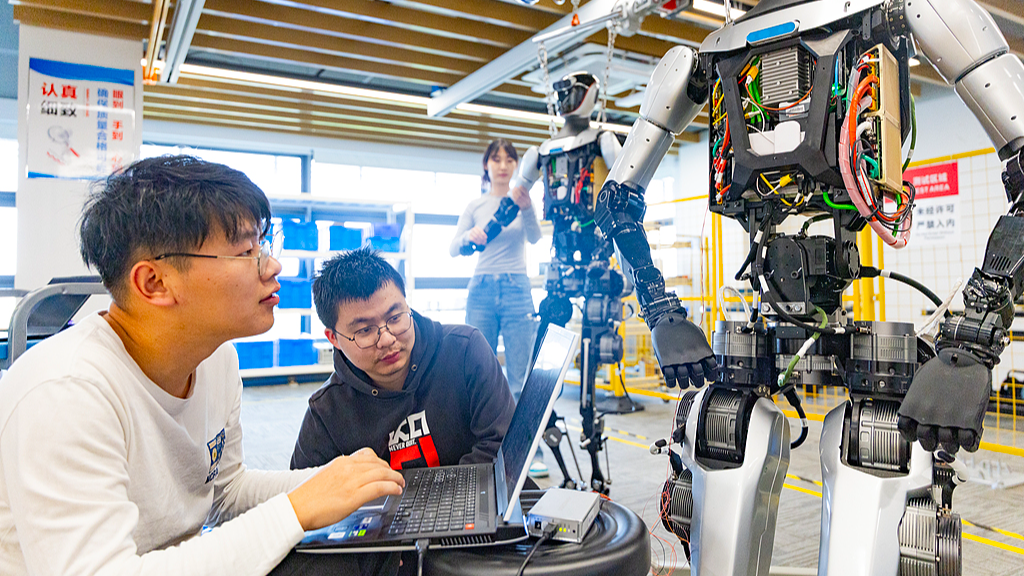
Recent analysis from Morgan Stanley adds weight to China’s claims of technological momentum. In its Robot Almanac, the firm noted that China has moved significantly ahead in the race to develop humanoid robots. Over the past five years, China has issued more patents in this field than any other country, signaling both research depth and industrial ambition.
The report also highlighted China’s cost advantages across the humanoid robot supply chain. From components to assembly, scale and manufacturing efficiency allow Chinese firms to produce advanced technologies at lower costs, strengthening their global competitiveness.
The Rise of Humanoid Robotics
Humanoid robots represent one of the most complex frontiers in modern engineering. They require advances in artificial intelligence, materials science, sensors, and power systems. China’s progress in this area reflects long term investment in research and a strong link between laboratories and manufacturing facilities.
By combining academic research with industrial application, Chinese companies are shortening the path from prototype to market. This integration supports rapid iteration and positions China as a key player in shaping how such technologies are deployed globally.
Innovated in China as a Global Label
Responding to the Morgan Stanley report, Foreign Ministry spokesperson Lin Jian said that the phrase Innovated in China has become a global buzzword in twenty twenty five. This shift in perception marks a change from earlier narratives that focused primarily on manufacturing scale.
Today, innovation originating in China increasingly influences global standards, platforms, and business models. From consumer technology to industrial systems, Chinese innovation is becoming a recognized part of the international landscape.
Economic Impact Beyond Technology
Science and technology development also plays a broader economic role. Advanced industries support productivity gains, create skilled employment, and stimulate related sectors such as education and services. For China, innovation driven growth is seen as essential to sustaining economic momentum as traditional drivers evolve.
At the global level, affordable and scalable technologies developed in China can lower entry barriers for developing economies. This contributes to shared growth and helps reduce disparities in access to modern tools and infrastructure.
Cooperation in a Competitive Environment
Despite intensifying global competition in technology, China continues to stress cooperation. Officials argue that challenges such as climate change, public health, and digital security require collective innovation rather than fragmented efforts.
International research partnerships, cross border investment, and shared standards are presented as mechanisms to ensure that technological progress benefits a wider range of countries. China’s message suggests that innovation leadership does not have to come at the expense of collaboration.
Looking Ahead in Science and Development
China’s pledge to deepen its role in global science and technology reflects confidence in its innovation capacity and an awareness of international expectations. Continued investment, openness to cooperation, and focus on real world applications will shape how this role evolves.
As technologies such as robotics, artificial intelligence, and advanced manufacturing mature, China’s influence on global economic development is likely to grow. Whether through shared supply chains, joint research, or accessible technologies, the country’s innovation drive is increasingly positioned as a component of global progress rather than a purely national endeavor.

