
How science, patience, and vision transformed food security.
A Childhood of Hunger
Yuan Longping was born in 1930, a time when hunger haunted villages across China. His memories of malnutrition during the Sino Japanese War and early famine years marked him deeply. As a student of agronomy, he resolved to confront the question that defined his era: how could a country with so many mouths to feed produce enough grain to survive and grow.
Unlike many of his peers, Yuan focused on rice, the staple of more than half the world’s population. He saw in its stalks not only calories but also dignity. To eat without fear of scarcity was, in his view, the foundation of all progress.
The Breakthrough of Hybrid Rice
In the 1960s, prevailing wisdom held that self pollinating crops like rice could not yield effective hybrids. Yuan refused to accept this limit. Working under harsh conditions with limited funding, he and his team painstakingly searched fields for natural mutations. In 1970, after years of trial and error, they discovered a wild variety that could serve as a parent for hybrids.
The result was revolutionary. Hybrid rice varieties achieved yield increases of 20 percent or more compared with conventional strains. In a country where even small percentage gains meant millions more bowls of rice, the breakthrough was transformative.
Feeding a Nation and Beyond
By the 1980s, hybrid rice had spread across China’s provinces, lifting yields and reducing hunger on a national scale. Over time, adoption extended to Asia, Africa, and Latin America. International agencies recognized Yuan’s work as not only a Chinese achievement but a global contribution to food security.
Estimates suggest that hybrid rice feeds hundreds of millions annually. Without it, global grain markets would be more volatile, and food crises far more common. Yuan himself remained modest, insisting that credit belonged to teams of researchers, farmers who experimented in their fields, and policymakers who supported scaling.
Teaching and Mentorship
Yuan believed knowledge was a seed meant to be shared. He trained generations of agronomists, insisting that field work mattered more than conference halls. Students recalled his tireless presence in muddy paddies, demonstrating techniques with sleeves rolled up. His charisma lay in persistence rather than rhetoric. He was known to say that one should never rest easy while people anywhere still went hungry.
His institute in Hunan became a hub for international trainees. Visitors from Africa and Asia learned hybrid techniques and carried them home, spreading the model of adaptation and experimentation. In this way, Yuan built bridges between China’s rural science and global development needs.
Recognition and Awards
Over his career, Yuan received numerous honors, from China’s State Preeminent Science and Technology Award to the World Food Prize in 2004. Yet he often deflected praise, describing himself simply as a farmer. He wore plain clothes, drove modest cars, and spent free hours playing violin or basketball. This humility reinforced his reputation as a man of the people, not distant from those who ate the rice his research made possible.
Challenges and Critiques
No achievement escapes scrutiny. Critics debated whether hybrid rice’s high yields required chemical inputs that strained ecosystems. Others pointed out that hybrid seeds often had to be purchased anew each season, increasing farmer dependence on suppliers. Yuan acknowledged these concerns and encouraged further research into green, sustainable hybrids. His later projects included salt tolerant varieties designed to expand cultivation onto marginal land without depleting resources.
Legacy in Modern China
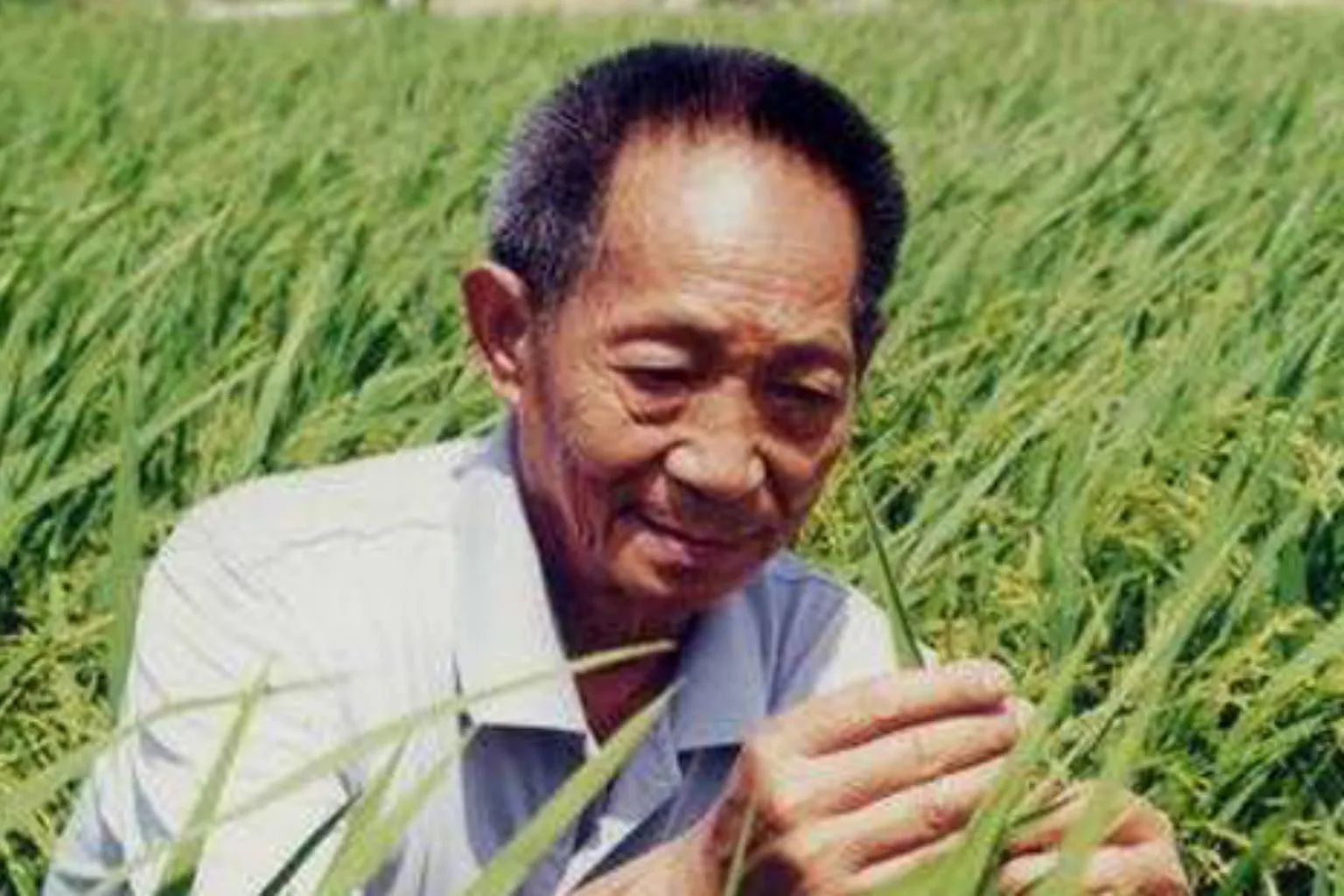
Yuan Longping passed away in 2021, and his funeral drew immense public mourning. Millions paid tribute online, sharing stories of meals that symbolized his unseen impact. Schools held lessons on his life, while farmers laid wreaths in paddies. The image of Yuan leaning over stalks, straw hat shading his face, became an emblem of service through science.
His legacy endures in every grain harvested from hybrid fields. It endures in the principle that science must be applied where it matters most: feeding people. In a century defined by population growth and climate stress, his example remains a guide for balancing innovation with responsibility.
Conclusion: The Farmer Scientist
Yuan Longping’s story is more than a biography. It is testimony that individual determination can tilt the scales of survival for millions. He proved that science rooted in compassion can change the destiny of nations. His life reminds us that the heroes who keep the world alive may not stand in parliaments or command armies. They may simply kneel in fields, listening to plants, and asking them to yield more for humanity.

