
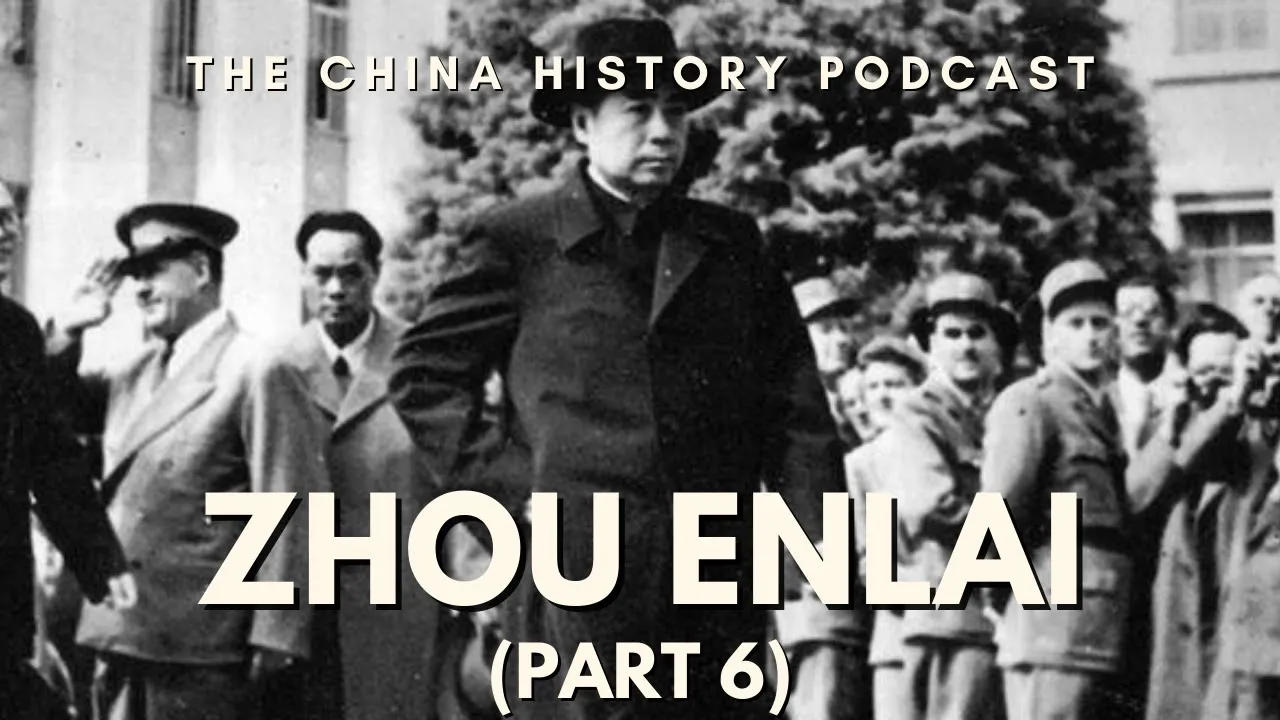
China’s first Premier balanced revolution and pragmatism, shaping foreign policy through turbulent times.
A Revolutionary with a Diplomat’s Instinct
Few figures in 20th-century China command as much respect across political divides as Zhou Enlai. Born in 1898, Zhou witnessed the fall of the Qing dynasty, the rise of the Republic, and the revolutionary storms that gave birth to the People’s Republic of China (PRC). As Mao Zedong’s close ally and China’s first Premier, Zhou became the architect of the young nation’s diplomacy, a revolutionary leader with the instincts of a statesman.
Unlike Mao’s fiery rhetoric, Zhou was known for his patience, tact, and ability to mediate. Whether negotiating with foreign powers or managing internal factions, he embodied pragmatism in an era defined by upheaval.
The Premier at Home
Domestically, Zhou’s role was often that of stabilizer. While Mao launched radical campaigns such as the Great Leap Forward and the Cultural Revolution, Zhou worked behind the scenes to mitigate chaos. He shielded intellectuals, protected cultural relics, and quietly maintained bureaucratic order when political storms threatened to tear the system apart.
During the Cultural Revolution, Zhou’s influence was most evident. Though powerless to stop mass persecutions, he intervened in countless cases, securing the survival of key scientists, doctors, and artists who would later contribute to China’s modernization. To many, Zhou represented a voice of reason amid ideological fervor.
Architect of Foreign Policy
Zhou’s diplomatic genius shone brightest on the international stage. In 1954, at the Bandung Conference in Indonesia, he articulated the “Five Principles of Peaceful Coexistence”: respect for sovereignty, non-aggression, equality, mutual benefit, and peaceful coexistence. These ideas became the cornerstone of China’s foreign policy, particularly toward newly independent nations in Asia and Africa.
Perhaps his most enduring achievement came in 1972, when Zhou orchestrated U.S. President Richard Nixon’s historic visit to China. Despite decades of hostility, Zhou’s negotiations opened the door to Sino-American rapprochement, reshaping Cold War geopolitics. His ability to blend firmness with flexibility allowed China to secure recognition without appearing submissive.
The Man Behind the Image
Zhou was admired not just as a statesman but as a personality. Known for his refined manners, fluency in foreign languages, and sharp intellect, he impressed both allies and rivals. Western diplomats often remarked on his charm, discipline, and tireless work ethic.
Yet his pragmatism also drew criticism. Some accused Zhou of being too cautious, too willing to compromise with Mao’s excesses. He endured humiliations during the Cultural Revolution, bowing to political theater to preserve his position and, by extension, his ability to shield others.
Final Years and National Mourning
Zhou Enlai battled cancer in his final years, passing away in January 1976. His death unleashed a wave of public grief. Millions mourned openly, with demonstrations in Tiananmen Square that soon evolved into criticism of the Cultural Revolution.
For many Chinese, Zhou’s passing symbolized the end of an era of moderation within chaos. Later generations remembered him as a leader who, despite immense constraints, sought stability, dignity, and diplomacy in a century of division.
Conclusion: A Diplomatic Legacy
Zhou Enlai’s legacy rests not in sweeping ideological visions but in his ability to manage contradictions. He was at once a revolutionary and a pragmatist, a loyal servant of the Party and a quiet protector of its victims, a negotiator who could make China heard without firing a shot.
In the long arc of China’s modern history, Zhou remains a reminder that diplomacy is not weakness, but a strength, the art of survival in a divided century.

